
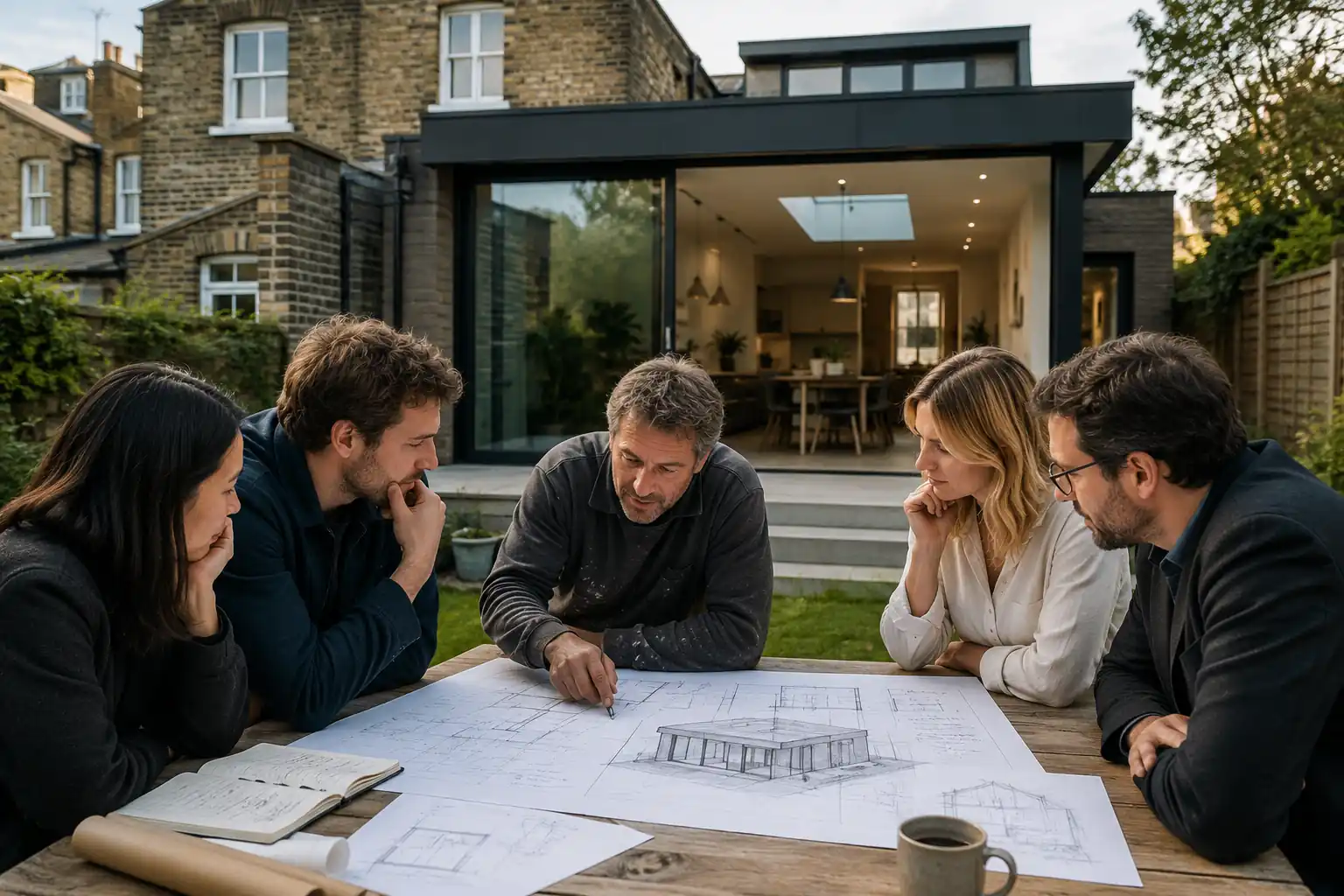
Five architects came to look at our house. Four of them spent the visit selling. The fifth, who turned out to be the cheapest, spent it asking why we wanted the extension at all. That question changed our whole plan and saved us from building something we didn’t actually need.
We had assumed we needed a big rear extension. More space, simple. So we lined up five architects for house extensions and braced ourselves for a bidding war on who could design the grandest thing. What we got instead was a lesson in how differently architects think.
The expensive ones measured up and started talking square metres and glass. The cheap one sat down with a cup of tea and asked what wasnt working about the house right now. Nobody else had asked that. It seems obvious, but it was the most useful question of the lot.
What the Sales Visits Looked Like
The first four visits followed the same script. Walk in, admire the house, talk about how much space they could add, hint at a six figure budget, leave a glossy brochure.
They were pleasant and professional. But they were answering a question we hadnt fully thought through. We had said extension, so they sold us an extension.
None of them challenged the brief. None asked whether the space we had was being used well. They just assumed bigger was the answer and priced it up.
The Question That Reframed Everything
The fifth architect asked us to walk her through a normal day. Where we ate, where the kids played, which rooms sat empty, where things felt cramped.
It turned out our problem wasnt really a lack of space. It was a badly arranged ground floor. A dark dining room nobody used, a kitchen cut off from everything, a hallway eating up room.
She suggested a modest single storey extension combined with reworking the existing layout, rather than a huge addition. Smaller build, lower cost, better result. The other four would have had us spend nearly double for a worse outcome.
Why Cheaper Did Not Mean Worse
Her fee was the lowest of the five, and I had been suspicious of that at first. We assume cheaper means less experienced or less thorough.
In her case it was the opposite. She was confident enough to suggest the smaller, smarter project rather than the biggest one she could talk us into. A pricier architect on a percentage fee has an incentive to make the build bigger. Hers was a flat fee, so she had no reason to inflate anything.
That alignment mattered. Her advice pointed at what was best for us, not what was best for her invoice. The cheapest quote came with the most honest thinking.
How Fee Structures Change the Advice
This was the part I hadnt understood before. Many architects charge a percentage of the total build cost. The bigger your build, the bigger their fee.
It doesnt make them dishonest. But it quietly nudges the advice towards more, bigger, grander. You feel it in how every conversation drifts upward in scope and cost.
A fixed fee removes that pull. The architect gets the same whether you build big or small, so they can tell you the truth about what you actually need. Worth asking how any architect charges before you start.
What the Smaller Project Delivered
We went with her plan. A modest extension at the rear plus a reworked layout that opened the kitchen into the living space and killed the useless dining room.
The result was a ground floor that felt twice the size, even though we added far less floor area than the other four proposed. Good design beat raw square metres. The light, the flow, the way rooms connected, all of it improved.
And because the build was smaller, it finished faster and cost less. We had money left over to do the garden properly, which we hadnt expected at all.
The Things All Five Agreed On
To be fair, the four sales focused architects werent wrong about everything. There were a few points every single one made, and those are worth listening to.
All five said get the drawings detailed before you let a builder quote, so the price is accurate. All five said sort the party wall agreement early on a terrace. And all five said factor in the planning timeline, because it always takes longer than you hope.
When five independent architects agree on something, thats the real advice. Those points are the non negotiables of any extension, whoever you hire.
How to Run Your Own Interviews
Get more than one architect round. Three at least, five if you can manage it. The contrast between them tells you more than any single visit.
Watch who challenges your brief and who just sells you what you asked for. The one who questions why you want the extension is thinking about your home. The one who only talks square metres is thinking about the fee.
And always ask how they charge. Fixed fee or percentage changes the advice you get, even if nobody admits it. Six to eight months from that round of interviews to a finished ground floor, and the cheapest architect gave us the best house. Sometimes the quiet question beats the polished pitch.
