
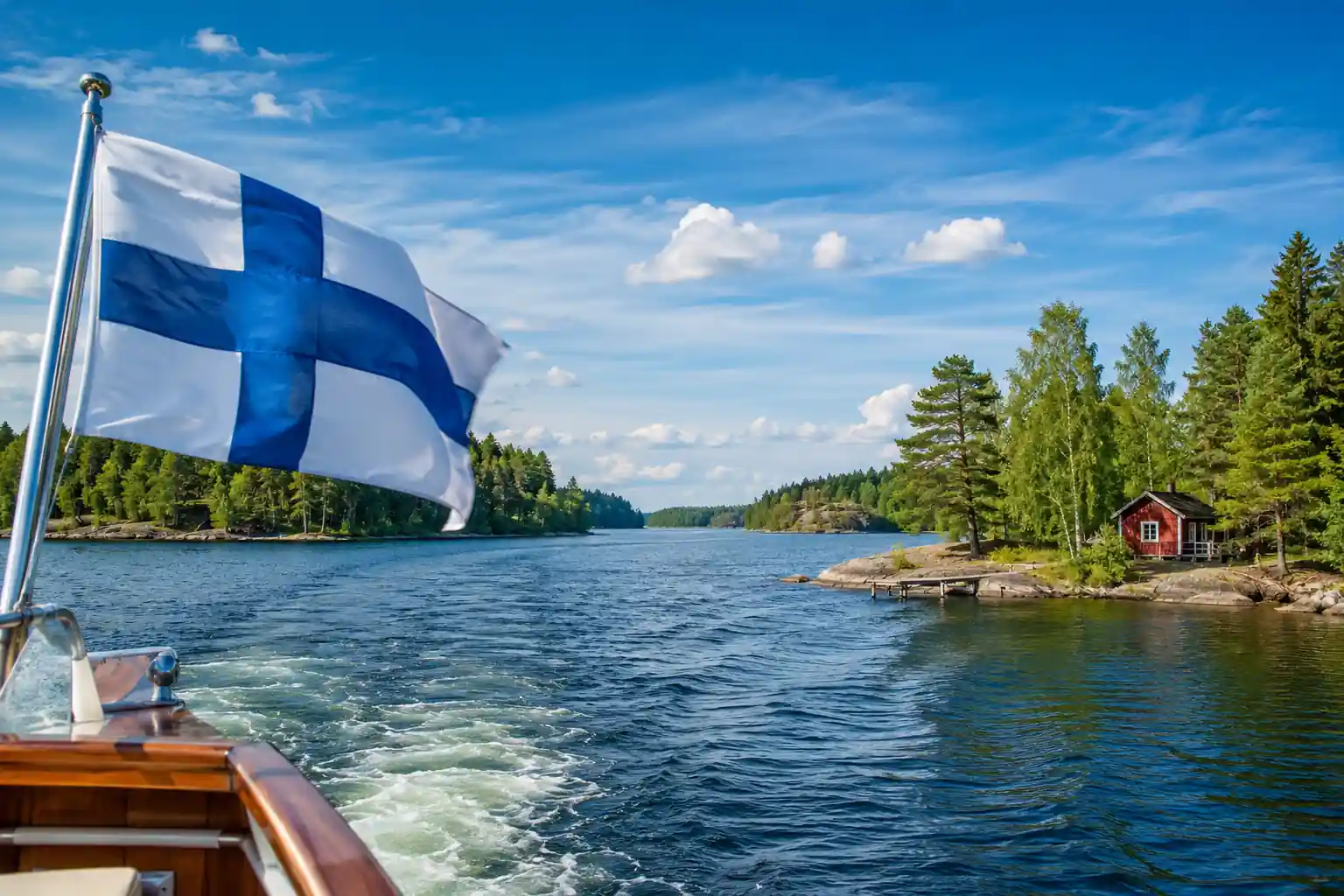
Veneajelu is a Finnish word that means “boat ride” — composed of vene (boat) and ajelu (casual ride). It refers to leisurely boating taken purely for relaxation and nature connection, not transportation or sport. Finland’s geography makes this tradition deeply practical: the country holds over 188,000 lakes, thousands of archipelago islands, and a long Baltic Sea coastline. For Finns, boating is not seasonal entertainment — it is part of how people live during summer.
- What Is Veneajelu?
- Historical Roots of Finnish Boat Riding Culture
- Cultural Significance of Veneajelu in Finland
- Types of Veneajelu Experiences
- Lake Boating
- Archipelago Trips
- City Boat Tours
- Sailing Trips
- Kayaking and Canoeing
- Speedboat and Motorboat Excursions
- Electric Boat Tours
- Popular Destinations for Finnish Boat Trips
- Helsinki Archipelago
- Lake Saimaa
- Turku Archipelago and Åland Islands
- Lapland Rivers and Lakes
- Porvoo River and Southern Lakes
- Best Time of Year for a Boat Trip in Finland
- How to Plan and Prepare for a Veneajelu
- Health and Wellbeing Benefits of Finnish Boating
- Boat Rentals and Tour Options in Finland
- Modern Evolution of Finnish Boat Riding
- Conclusion
- FAQs
- What does veneajelu mean in Finnish?
- Do I need a boating license to enjoy a Finnish boat trip?
- What is the best season for a boat trip in Finland?
- What should I pack for a Finnish boating trip?
- Is Finnish lake boating safe for families and children?
- How is a veneajelu different from a regular boat tour?
- Where are the best places for a Finnish boating experience?
- What types of boats are used for leisure boating in Finland?
What Is Veneajelu?
Veneajelu describes a relaxed, unhurried journey on water. The goal is not reaching a destination quickly. It is the act of moving slowly across a lake, river, or coastal inlet while observing the surrounding nature.
Unlike commercial ferry travel or organized sightseeing cruises, a Finnish boat ride has no fixed schedule. People stop at islands, watch wildlife, fish, or simply float in silence. It suits solo travelers, couples, families, and groups equally.
The term covers a wide range of watercraft and experiences — from a short rowing session on a quiet inland lake to a multi-day motorboat journey through the archipelago. What stays constant is the intent: slow travel, fresh air, and genuine disconnection from daily routine.
Historical Roots of Finnish Boat Riding Culture
Boating in Finland was never optional in its early history. Before road infrastructure reached most of the country, lakes and rivers were the primary routes for fishing, trade, and travel between settlements. Wooden boats, hand-crafted by local artisans, were functional tools for survival.
By the 20th century, that necessity shifted. Roads expanded, settlements connected, and boats moved from daily utility into weekend recreation. Lakeside cottages became a fixture of Finnish summer life, and the boat ride became something families returned to by choice rather than need.
That shift preserved the tradition rather than ending it. Today, the cultural weight of this practice comes precisely from that history — it carries the memory of how earlier generations moved, fished, and connected across water.
Cultural Significance of Veneajelu in Finland
The Mökki Tradition
The mökki — Finland’s iconic summer cottage — is the clearest expression of how deeply water life is embedded in Finnish culture. Most mökkis sit beside a lake or river, and a boat is treated as standard equipment, not a luxury.
Families spend weeks at their cottages during summer. Daily rhythms slow down. Boats are used to visit neighbors across the lake, reach fishing spots, or simply drift through the evening as the sun stays visible past midnight.
Finnish Boating Values
Finnish culture places high value on silence, space, and self-reliance. A boat ride aligns with all three. Unlike commercial ferry cruises, the Finnish boating tradition avoids entertainment, noise, and crowd. The focus is simple living and nature appreciation.
Trips often span generations — grandparents, parents, and children sharing the same waterway, the same rowing rhythm. This generational continuity gives the tradition cultural identity that goes well beyond leisure.
Types of Veneajelu Experiences
| Type | Best For | Typical Craft |
| Lake Boating | Beginners, families, cottage life | Rowboat, small motorboat |
| Archipelago Trips | Island hopping, scenic routes | Canoe, kayak, motorboat |
| City Boat Tours | Tourists, guided sightseeing | Guided cruise vessel |
| Sailing Trips | Experienced boaters, open water | Sailboat, yacht |
| Kayaking and Canoeing | Wildlife observation, narrow waterways | Kayak, canoe |
| Speedboat Excursions | Long distances, fishing, full-day trips | Motorboat |
| Electric Boat Tours | Eco-conscious travelers | Solar-powered, electric boat |
Lake Boating
The most traditional form. Calm inland lakes, a rowboat or small motorboat, and no particular agenda. It is beginner-friendly and directly tied to summer cottage life across Finland.
Archipelago Trips
Southwest Finland’s coastline includes tens of thousands of islands. Archipelago boating involves navigating between them — stopping at hidden beaches, following scenic sea routes, and exploring by kayak or canoe through narrow channels.
City Boat Tours
Helsinki offers guided cruises that combine urban skyline views with access to nearby islands. These tours work well for first-time visitors who want historical context alongside the coastal experience.
Sailing Trips
The Turku Archipelago and Åland Islands are the primary sailing areas. Charters are available for both beginners and experienced sailors, with wind-powered journeys offering a quieter and engine-free alternative.
Kayaking and Canoeing
Paddling through narrow waterways allows close contact with wildlife and vegetation that motorboats cannot reach. Popular among photographers and nature-focused travelers.
Speedboat and Motorboat Excursions
Motorboats cover longer distances efficiently, making them practical for fishing trips, island-hopping days, or reaching remote spots. No-wake rules apply near shorelines and residential areas.
Electric Boat Tours
Electric and solar-powered boats are becoming more common in Helsinki and other cities. They produce no noise and no emissions, making them the most environmentally responsible option for carbon-neutral cruising.
Popular Destinations for Finnish Boat Trips
Helsinki Archipelago
The capital city sits surrounded by over 300 islands. Boats depart from the central harbor and reach open sea within minutes. The historic Suomenlinna fortress is a popular stop, visible from the water with the Gulf of Finland as a backdrop.
Lake Saimaa
Finland’s largest lake covers roughly 4,000 km² and contains thousands of islands within its basin. It is also home to the critically rare Saimaa ringed seal — with only around 500 individuals remaining. Multi-day boating trips here combine fishing for pike and perch with genuine wildlife encounters in misty bays.
Turku Archipelago and Åland Islands
This southwest region holds approximately 20,000 islands. The Åland Islands are an autonomous, Swedish-speaking area with their own character — red cottages, local fish markets, and ferry-linked routes suited to both motorboats and sailboats.
Lapland Rivers and Lakes
Northern rivers including the Tornio and lakes near Rovaniemi offer boat trips under the midnight sun. In midsummer, daylight lasts nearly 24 hours, allowing paddling at any hour through pristine boreal forests.
Porvoo River and Southern Lakes
East of Helsinki, the Porvoo River passes through one of Finland’s oldest towns. The surrounding Uusimaa region includes smaller lakes such as Vanajavesi, suited to slow, rural cruising without the crowds of larger destinations.
Best Time of Year for a Boat Trip in Finland
Summer — June through August — is the primary boating season. Water temperatures are manageable, and daylight in southern Finland extends to around 19 hours. North of the Arctic Circle, the sun does not set at all during peak summer weeks.
Midsummer (late June) includes traditional bonfires, boat parades, and lake gatherings that are specific to Finnish culture. Booking boats or guided tours in advance during this period is essential.
May and September offer quieter conditions with fewer tourists and lower prices. Foliage in autumn creates striking reflections on the water. However, temperatures drop noticeably, and storm risks increase — always check forecasts before departing.
How to Plan and Prepare for a Veneajelu
Choosing the Right Boat
Match the vessel to the trip. A kayak or rowboat handles short paddles on calm lakes. Longer routes or larger groups need a motorboat or chartered sailboat. Most rental companies provide GPS and navigation charts. Beginners should consider guided tours or booking with a licensed skipper.
What to Pack
- Life jackets (mandatory for all passengers)
- Sunscreen, sunglasses, hat
- Waterproof phone case and camera
- First-aid kit, binoculars, power bank
- VHF radio or charged mobile device
- Campfire supplies or picnic food
- Spare sweater and raincoat — weather shifts quickly on open water
Safety Rules and Local Regulations
Finnish waterways have clear rules. No-Wake Zones near shorelines are enforced. Fishing regulations vary by area and require checking in advance. Before departure, share a float plan with someone on shore — your route, expected return time, and emergency contact. Maritime signage including buoys and channel markers must be followed. Alcohol is prohibited while operating any watercraft.
Health and Wellbeing Benefits of Finnish Boating
Physical Benefits
Rowing and paddling engage the arms, shoulders, and core. Regular sessions on the water build cardiovascular fitness and muscular endurance. Outdoor exposure also supports the body’s natural production of vitamin D — particularly relevant during Finland’s long summer days.
Mental and Emotional Benefits
Moving across open water at a slow pace produces a measurable reduction in cortisol. The meditative rhythm of rowing, combined with natural sounds, supports mindfulness without requiring any formal practice. Many people describe the experience as a natural digital detox — the absence of screens and notifications produces noticeable clarity within hours.
Social Benefits
Shared boat trips consistently generate stronger relational bonds than indoor social activities. Fishing together, stopping at islands for picnics, or simply sitting in silence side by side builds the kind of familiarity that busy environments rarely allow.
Boat Rentals and Tour Options in Finland
Marinas in Helsinki, Turku, and Tampere offer motorboats, sailboats, kayaks, and rowboats for hourly or daily hire. Electric boat rentals are increasingly available in urban areas. Small vessels typically require no boating license; motorboats over 15 kW may require proof of skills or a licensed skipper provided by the rental company.
Guided tours range from city sightseeing cruises to BBQ sauna boat tours with local delicacies served on board. Weekend packages often include sunset sails, island stops, and pre-arranged picnic provisions. Book well ahead during June and July — capacity at popular marinas fills quickly.
Modern Evolution of Finnish Boat Riding
The core of the tradition has not changed, but access to it has. Digital booking systems now allow tourists to reserve boats and guided tours from abroad before arriving in Finland. GPS and digital mapping have lowered the barrier for first-time boaters unfamiliar with Finnish waterways.
Electric boats are the most visible shift. Helsinki actively promotes slow electric boating as a clean urban activity. Solar-powered vessels produce no noise and leave no emissions — important in a country with strong environmental standards around lake and coastal water quality.
Younger generations are returning to the tradition not despite modern technology, but through it. Online access, simplified booking, and eco-conscious options have made this form of slow travel more visible to international tourists than at any previous point.
Conclusion
Finnish boating culture rewards those who approach it without rushing. Picking the right season, choosing a boat that matches your experience level, and respecting local water regulations converts a simple lake trip into something genuinely memorable. Before your next trip to Finland, check marina availability in Helsinki or Lake Saimaa — both regions offer rental options across all experience levels, and booking a half-day veneajelu is one of the most direct ways to understand why Finns have centered their summers around water for generations.
FAQs
What does veneajelu mean in Finnish?
It combines vene (boat) and ajelu (casual ride), literally meaning “boat ride.” The term refers to leisurely, unhurried boating on lakes, rivers, or coastal waters — a recreational and cultural tradition, not a mode of transport.
Do I need a boating license to enjoy a Finnish boat trip?
Small vessels — canoes, rowboats, and low-power outboards — typically require no license. Motorboats exceeding 15 kW generally require a boating license or proof of skills. Most rental companies provide a licensed skipper if needed.
What is the best season for a boat trip in Finland?
June through August offers ideal conditions — warm temperatures, calm waters, and up to 19 hours of daylight in southern Finland. May and September work well for off-peak travelers willing to pack extra layers and monitor weather forecasts closely.
What should I pack for a Finnish boating trip?
Life jackets, sunscreen, waterproof phone case, first-aid kit, GPS device, raincoat, and food or campfire supplies for island stops. Weather on open water changes fast — always bring more layers than you expect to need.
Is Finnish lake boating safe for families and children?
Yes, with proper precautions. Children must wear fitted life jackets at all times. Stick to calm inland lakes for young children, maintain constant supervision, and avoid high-traffic waterways. Beginner-friendly rental operators can recommend suitable routes.
How is a veneajelu different from a regular boat tour?
Commercial boat tours follow fixed schedules, routes, and group formats. The Finnish boating tradition is destination-free — no timetable, no commentary track. The emphasis is mindfulness, simplicity, and personal pace rather than organized sightseeing.
Where are the best places for a Finnish boating experience?
Helsinki Archipelago, Lake Saimaa, Turku Archipelago, Åland Islands, Lapland rivers near Rovaniemi, and the Porvoo River each offer distinct conditions. Lake Saimaa suits multi-day wildlife-focused trips; Helsinki suits day visitors with limited time.
What types of boats are used for leisure boating in Finland?
Traditional wooden venheet, rowboats, motorboats, kayaks, canoes, sailboats, and electric or solar-powered boats are all used. Choice depends on route length, group size, experience level, and environmental preference.
