
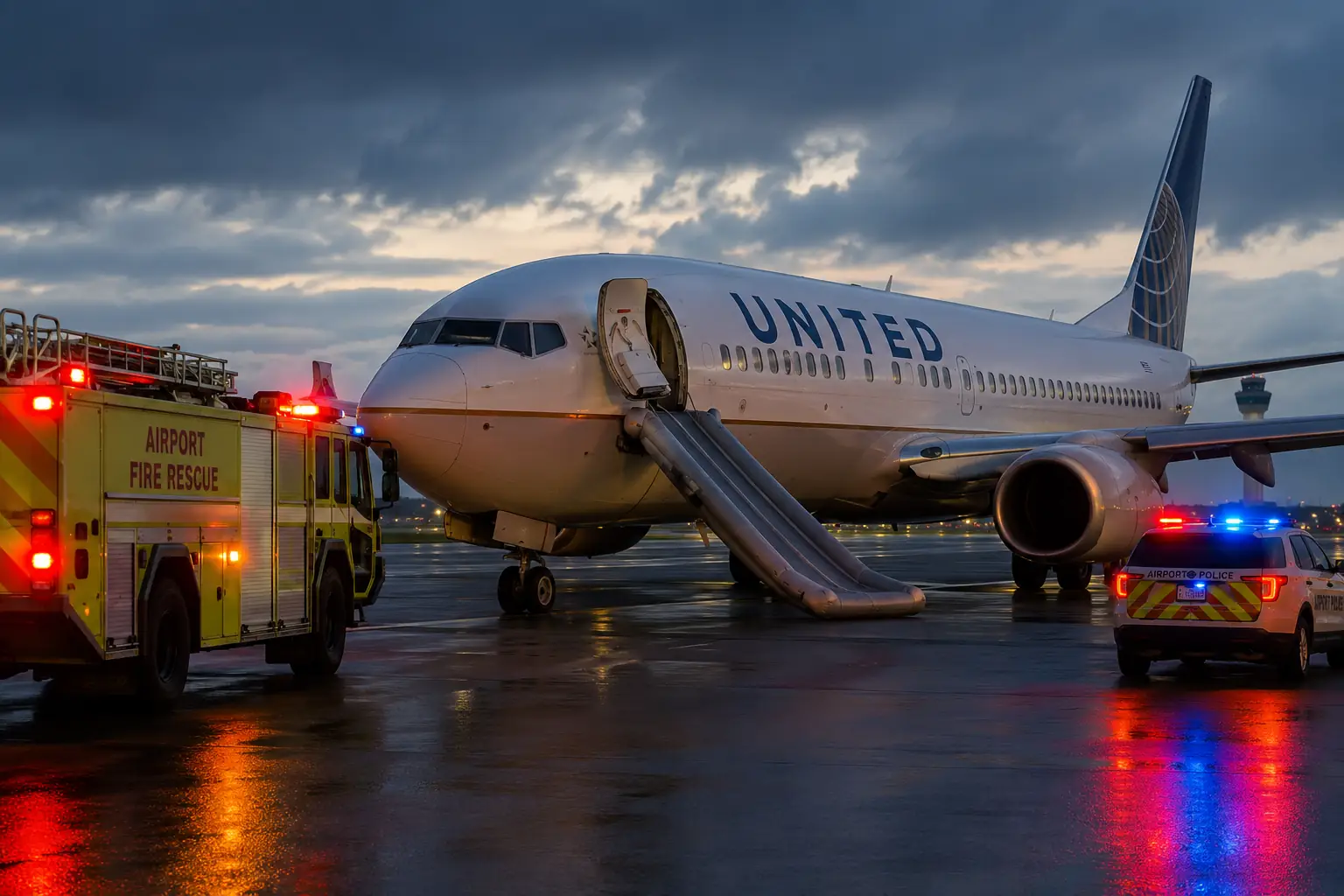
If you searched for the United Airlines flight UA770 emergency diversion, here’s the short answer: no airline statement, FAA record, NTSB filing, or flight-tracking history confirms this event. The story shows up on dozens of websites, but the details don’t match from one site to the next. Some say the flight left Barcelona. Others say San Francisco. Some say it landed in London. Others say Denver. That’s not how real aviation incidents get reported.
- What People Are Searching For (Quick Answer)
- Where the UA770 Emergency Diversion Story Comes From
- How the claim started circulating online
- Why details differ between sources
- How to verify a flight incident yourself
- What an Emergency Diversion Actually Means in Aviation
- Emergency diversion vs. emergency landing
- What is Squawk 7700?
- Who decides to divert — the pilot, airline, or ATC?
- Common Reasons Commercial Flights Divert
- What Happens Step-by-Step During a Diversion
- Passenger Rights and Compensation After a Flight Diversion
- U.S. Department of Transportation (DOT) rules on diversions
- When airlines must provide meals, hotel, and rebooking
- “Extraordinary circumstances” exceptions
- EU261 rules if the diversion involves European airspace
- How Common Are Emergency Diversions?
- Conclusion
- FAQs
- What happened on United Airlines flight UA770?
- Was anyone injured?
- What is Squawk 7700?
- Do passengers get compensated for a diverted flight?
- How can I check if a specific flight diverted?
- Is it true that United Airlines had a flight emergency in 2025?
- Is United Airlines safe to fly?
- What’s the difference between an emergency landing and a diversion?
What People Are Searching For (Quick Answer)
People look up “UA770 emergency diversion” expecting a news story. What they find instead is a cluster of articles that read like news but contradict each other on basic facts. No two sites agree on the date, the route, or the cause.
Here’s a side-by-side look at the claims found across the top search results for this term:
| Claimed Detail | What’s Reported | Verification Status |
| Date | May 27, 2025 / May 28, 2025 / July 21, 2025 / July 28, 2025 / April 2026 (five different dates) | ❌ Contradicted across sources |
| Route | Barcelona→Chicago / San Francisco→Chicago (two different routes) | ❌ Contradicted across sources |
| Diversion airport | London Heathrow / Denver (two different airports) | ❌ Contradicted across sources |
| Aircraft | Boeing 787-9 Dreamliner | ⚠️ Plausible but unconfirmed for this flight |
| Tail number | N26902 | ❌ No flight-tracking or FAA record matches |
| Cause | Cabin pressurization warning / hydraulic alert / “starboard engine anomaly” / generic “technical issue” (four different causes) | ❌ Contradicted across sources |
| Injuries | “None reported” | ⚠️ Consistent claim, but tied to an unverified event |
| FAA/NTSB involvement | “Investigating” or “monitoring” | ❌ No matching public filing found |
When a real plane diverts for an emergency, the basic facts (date, route, airport) stay the same no matter who reports it. Here, they don’t. That’s the clearest sign this isn’t a documented event.
Where the UA770 Emergency Diversion Story Comes From
How the claim started circulating online
There’s no single news outlet, wire service, or official statement that started this story. Instead, it appears across a group of websites that publish similar “emergency diversion” articles about different flight numbers, often reusing the same sentence structures and stock explanations of aviation procedures. One site even built its entire domain around this specific flight number, which is a strong sign the content was created to capture search traffic rather than to report something that happened.
Why details differ between sources
Real incidents get one date, one route, and one cause, because they’re tied to an actual flight that actually took off. When five sources give you five different combinations, you’re not looking at reporting. You’re looking at separate pieces of content that each guessed at plausible-sounding details and never checked them against a real source.
How to verify a flight incident yourself
You don’t need to take any article’s word for it. A few minutes of checking gets you a real answer:
- FlightAware or Flightradar24: search the flight number and date to pull up the actual flight history, including altitude, route, and whether it landed somewhere other than its scheduled destination.
- FAA and NTSB public databases: both agencies publish incident and accident records. A genuine emergency diversion involving a major U.S. carrier almost always leaves a paper trail here.
- Aviation news outlets: sites that specialize in covering real incidents, like The Aviation Herald, typically report within hours of a real diversion, citing the specific squawk code and ATC communications.
- The airline’s own newsroom: United Airlines posts statements about safety incidents that involve its flights. If nothing shows up there, that’s a strong signal.
If you ran any of these checks for UA770 and came up empty, that matches what we found, too.
What an Emergency Diversion Actually Means in Aviation
Whatever the truth about this specific flight number, the underlying topic is real and worth understanding. Here’s how it actually works.
Emergency diversion vs. emergency landing
An emergency diversion means the flight changes its destination mid-route and lands somewhere other than where it was scheduled to go. An emergency landing is a broader term that can include diversions, but also covers situations where a plane lands at its original destination earlier or faster than planned, or makes an unscheduled landing close to where the problem started. Diversions specifically involve picking a different airport.
What is Squawk 7700?
Squawk 7700 is a transponder code pilots use to tell air traffic control they have a general emergency. Once it’s set, controllers clear airspace around the aircraft, give it priority for landing, and alert emergency crews at the arrival airport. It’s one of a small set of universal emergency codes, alongside 7600 for lost communications and 7500 for a hijacking situation.
Who decides to divert — the pilot, airline, or ATC?
The pilot in command makes the final call. Airline dispatchers and maintenance teams can offer input over radio or data link, and air traffic control manages the airspace and clears a path, but the decision to divert rests with the captain in the cockpit. That’s a deliberate design in aviation safety: the person closest to the problem, with the most complete real-time information, makes the call. This emphasis on leadership and accountability is reflected in military aviation, where many service members preserve career milestones with Air Force frames.
Common Reasons Commercial Flights Divert
Diversions happen for a handful of well-documented reasons:
- Mechanical or technical issues — a warning light, system fault, or equipment malfunction that needs ground inspection.
- Cabin pressurization problems — sensors detecting an irregularity in pressure control, even before it becomes dangerous.
- Medical emergencies — a passenger or crew member needs care beyond what’s available onboard.
- Severe weather or airspace restrictions — storms, turbulence, or sudden closures along the planned route.
- Security concerns — anything from a disruptive passenger to a credible threat reported to the crew.
Real, well-documented diversions happen for all of these reasons every year. The issue with UA770 isn’t that diversions are rare or implausible. It’s that this particular flight number, on any of the dates claimed, doesn’t show up in any record that would exist if it had actually happened.
What Happens Step-by-Step During a Diversion
- Detection and assessment. The flight crew notices a warning, alert, or report from a passenger or crew member, and runs through standard checklists to assess severity.
- Communication with ATC. The crew contacts air traffic control, often setting Squawk 7700, and requests priority routing to the nearest suitable airport.
- Descent and rerouting. Controllers clear the airspace ahead, and the flight begins its descent toward the new destination.
- Ground coordination. Emergency services, including fire and medical crews, are placed on standby at the arrival airport before the plane lands.
- Landing and passenger care. The aircraft lands, passengers disembark, and the airline arranges next steps, which can include inspections, rebooking, and accommodations.
Passenger Rights and Compensation After a Flight Diversion
This part is genuinely useful even if UA770 itself isn’t real, because diversions do happen to real travelers, and most people don’t know their rights going in.
U.S. Department of Transportation (DOT) rules on diversions
The DOT doesn’t require airlines to pay cash compensation for delays or diversions caused by mechanical issues or weather. What it does require is that airlines follow through on the customer service commitments listed in their own contract of carriage, which for most U.S. carriers includes rebooking on the next available flight and, in some cases, meals or lodging if the delay stretches overnight.
When airlines must provide meals, hotel, and rebooking
This depends entirely on the airline’s contract of carriage and the cause of the disruption. If the diversion was within the airline’s control, like a maintenance issue, you’re more likely to get hotel and meal vouchers. If it was outside their control, like weather, the airline still has to get you to your destination, but isn’t obligated to cover extra expenses.
“Extraordinary circumstances” exceptions
Weather, air traffic control restrictions, and security threats generally count as extraordinary circumstances. Under those conditions, airlines have more limited obligations than when the cause is something they could have controlled, like a mechanical problem tied to poor maintenance.
EU261 rules if the diversion involves European airspace
If a flight is operated by an EU carrier, or departs from an EU airport, EU261 rules can apply and are stricter than U.S. rules, sometimes requiring cash compensation based on flight distance and delay length. A U.S. carrier flying from a European airport, for example, can fall under these rules depending on the specifics of the route and ticket.
How Common Are Emergency Diversions?
Diversions are uncommon relative to the total number of flights operated daily by U.S. carriers, and the large majority are precautionary rather than the result of an actual failure. Government aviation data tracks delays and cancellations across carriers, and diversions make up a small slice of total flight disruptions industry-wide. That’s worth keeping in mind: even if UA770 isn’t a real event, the broader pattern it describes (a precautionary landing, handled calmly, with no injuries) is exactly what most real diversions look like.
Conclusion
The UA770 emergency diversion, as described across the websites currently covering it, doesn’t hold up against basic fact-checking. Five different sources give five different dates, two different routes, two different diversion airports, and four different causes for the same flight number. None of it traces back to an airline statement, an FAA or NTSB record, or a flight-tracking history. That’s not a documented aviation incident; it’s a piece of content that spread before anyone checked it.
If you came here because you’re worried about a flight, the fastest way to get a real answer is to look the flight number up directly on FlightAware or Flightradar24. If you’re researching how diversions work in general, the procedures and passenger rights covered above apply whether or not this specific incident turns out to be real. And if you’re seeing this story repeated across multiple sites that all look slightly different but say the same unverifiable things, that’s usually a sign you’re looking at recycled content, not independent reporting.
FAQs
What happened on United Airlines flight UA770?
Based on available evidence, nothing confirmed. The “emergency diversion” tied to this flight number circulates across several websites with contradicting dates, routes, and causes, and no airline statement, FAA record, or flight-tracking history backs it up.
Was anyone injured?
There’s no verified incident, so there’s no verified injury report either. The articles describing this event all claim no injuries, but that claim applies to an event that isn’t documented anywhere outside those same articles.
What is Squawk 7700?
It’s the universal transponder code pilots use to alert air traffic control to a general in-flight emergency. Setting it gives the aircraft priority for descent, routing, and landing, and puts emergency crews on standby at the arrival airport.
Do passengers get compensated for a diverted flight?
It depends on the cause. U.S. airlines generally aren’t required to pay cash compensation for weather-related diversions, but they typically have to rebook you, and may owe meals or lodging if the issue was within their control.
How can I check if a specific flight diverted?
Search the flight number and date on FlightAware or Flightradar24 for the actual flight path and any rerouting. You can also check the FAA or NTSB public incident databases, or look for coverage from aviation-specific news outlets that track squawk codes and ATC audio in real time.
Is it true that United Airlines had a flight emergency in 2025?
United, like every major airline, has had real, documented incidents over the years, each with their own flight numbers, dates, and NTSB or FAA records. UA770 specifically isn’t one of them, at least not based on any record currently available.
Is United Airlines safe to fly?
United operates under the same FAA safety oversight as every other U.S. major carrier, with documented incidents (like any large airline) tracked through public NTSB and FAA records. Whether a specific flight number had an emergency is a separate question from the airline’s overall safety record, and one shouldn’t be confused for the other.
What’s the difference between an emergency landing and a diversion?
A diversion means the plane lands somewhere other than its scheduled destination. An emergency landing is the broader category, which can include diversions but also covers unscheduled landings closer to the original route. Most emergencies that make the news involve a diversion to the nearest suitable airport.
