
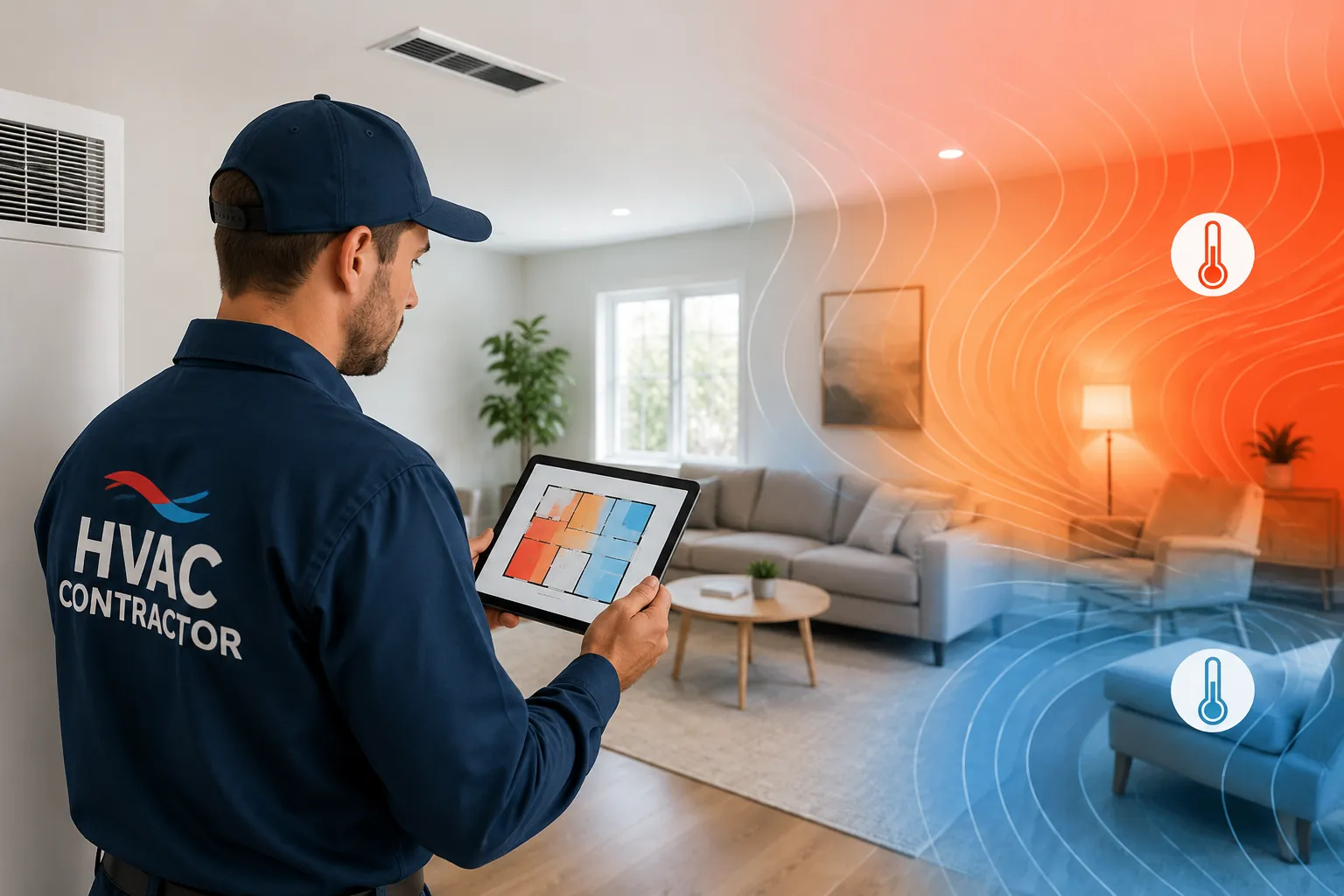
Hot and cold spots can make a home uncomfortable even when the heating and cooling system is running. One room may feel too warm, another may stay chilly, and the thermostat may not reflect what people feel in different areas. These uneven temperatures often stem from airflow problems, duct leaks, poor insulation, weak returns, thermostat placement, or equipment not matched to the home. An HVAC contractor helps identify the cause and correct the balance so every room feels more consistent. Better temperature control also supports energy savings and reduces system strain.
Comfort Balance Basics
-
Checking Airflow Room by Room
An HVAC contractor begins by checking how air moves through each room. Hot and cold spots often appear when one area receives too much conditioned air while another receives too little. This can happen when vents are blocked, dampers are poorly adjusted, ducts are undersized, or the blower is not moving enough air. A contractor may measure airflow at supply registers, inspect return vents, and compare room temperatures to find where the imbalance begins.
Homeowners can also check the Semper Fi Heating and Cooling website for help with comfort issues caused by uneven air movement. This room-by-room review matters because simply changing the thermostat usually does not fix the problem. It may make one room more comfortable while making another worse. By identifying where airflow is weak or excessive, the contractor can recommend adjustments that move air more evenly through the home.
-
Inspecting Duct Leaks and Delivery Problems
Ductwork has a major effect on indoor comfort because it carries heated or cooled air from the system to each room. If ducts are leaking, loose, crushed, poorly sealed, or badly insulated, air may escape before it reaches the living space. A bedroom at the end of a long duct run may stay too warm in summer or too cold in winter because conditioned air is lost in the attic, crawl space, or wall cavity. An HVAC contractor can inspect accessible duct sections, test pressure, look for damaged joints, and check whether duct sizes match the home’s layout. Repairing leaks or adding insulation can help more air reach the rooms that need it. Better duct delivery also lowers system strain because the equipment no longer has to run longer to compensate for lost air. This creates steadier comfort and reduces wasted energy.
-
Improving Return Air Circulation
Return airflow is just as important as supply airflow. Supply vents send conditioned air into rooms, but return pathways pull air back to the system so it can be heated or cooled again. When returns are missing, blocked, undersized, or poorly placed, some rooms may feel stale, pressurized, or disconnected from the rest of the home. Doors can also trap air in bedrooms if there is no clear return path.
An HVAC contractor can review the placement and size of return vents, check air pressure between rooms, and recommend changes that improve circulation. This may include adding return vents, using transfer grilles, adjusting duct layout, or keeping certain pathways open. When air can move in a complete cycle, temperatures become easier to balance. Strong return airflow also helps the system operate more smoothly, reduce noise, and maintain comfort without constant thermostat changes.
-
Reviewing Insulation and Heat Gain
Hot and cold spots are not always caused by HVAC equipment alone. Some rooms gain or lose heat faster because of poor insulation, large windows, attic exposure, wall gaps, drafty doors, or sun-facing orientation. A room over a garage may feel colder in winter, while a room with large west-facing windows may become too warm in the afternoon. An HVAC contractor can look for signs that the building itself is making the system work harder.
They may recommend attic insulation improvements, duct insulation, sealing air leaks, or better temperature control in rooms affected by outdoor conditions. This step is important because the HVAC system cannot fully balance comfort if rooms are constantly losing or gaining heat through the building shell. Reducing heat transfer helps rooms retain conditioned air longer, which makes the whole home feel more evenly conditioned and reduces unnecessary runtime.
-
Using Zoning and Thermostat Adjustments
In some homes, one thermostat cannot represent the comfort needs of every room. If the thermostat is in a hallway, near sunlight, close to a vent, or in a naturally balanced area, it may shut the system off before distant rooms reach the right temperature. An HVAC contractor can check thermostat location and determine whether controls are contributing to hot and cold spots. For larger homes or homes with different comfort zones, zoning may help. Zoning uses separate controls and dampers to direct more air to specific areas as needed.
Smart thermostats and remote sensors may also help the system respond to actual room conditions rather than one wall reading. Better control prevents the system from overheating or overcooling the whole house to fix one problem room. With proper thermostat setup, indoor comfort becomes easier to manage throughout the day.
An HVAC contractor helps reduce hot and cold spots by finding the real cause of uneven comfort. The issue may involve weak airflow, duct leaks, poor return circulation, insulation gaps, heat gain, or thermostat placement.
A careful inspection allows the contractor to recommend repairs and adjustments that balance temperature from room to room. These improvements can make the home feel more comfortable while reducing energy waste and equipment strain. Instead of relying on constant thermostat adjustments, homeowners can benefit from targeted HVAC adjustments that help every space feel steadier through changing seasons.
