
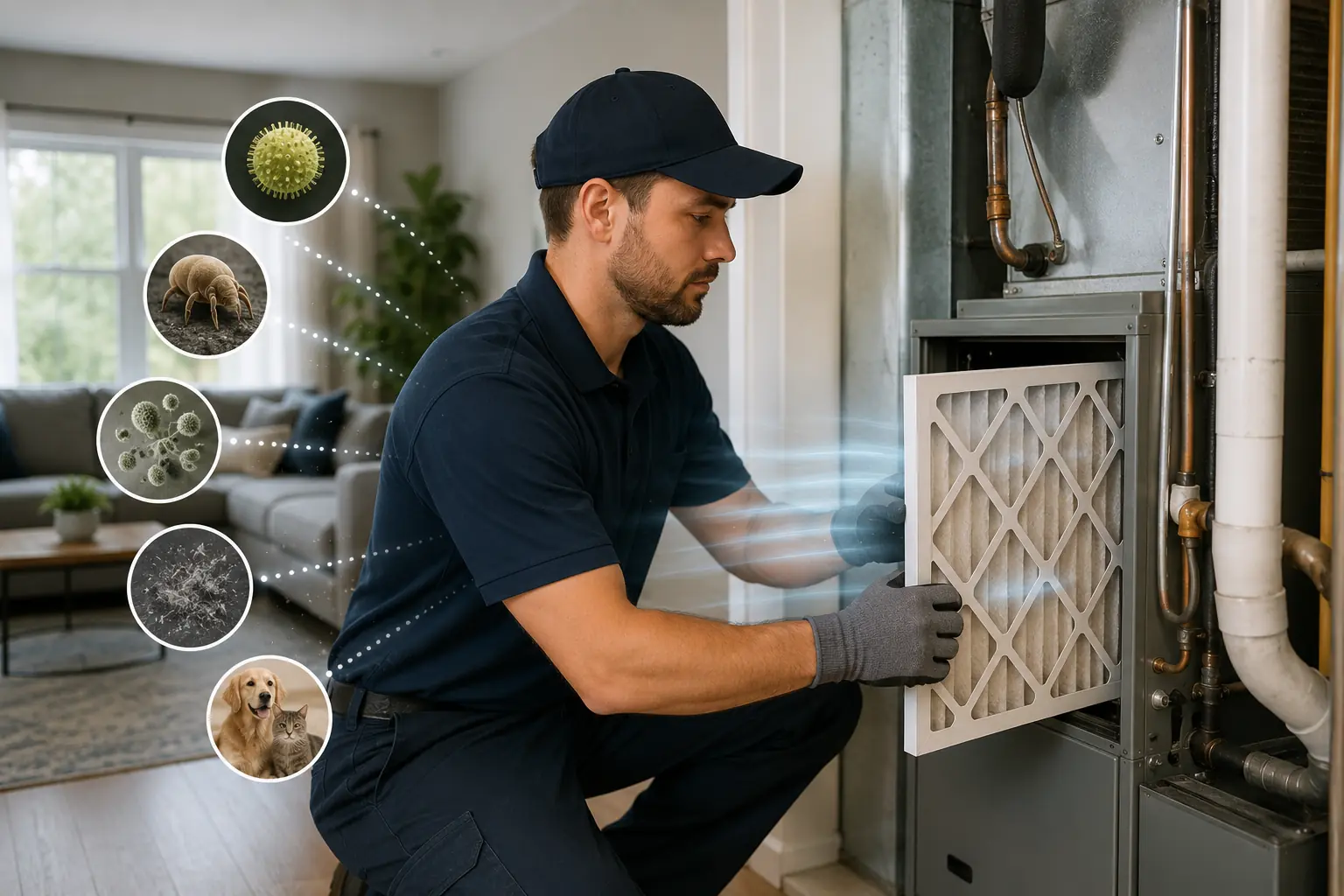
Allergy and dust problems often begin with the air moving through a home every day. Dust, pollen, pet dander, insulation particles, mold spores, and other irritants can collect inside filters, ducts, vents, and equipment. When the HVAC system runs, those particles may circulate from room to room, making the home feel dusty even after cleaning. HVAC contractors help by checking airflow, filtration, duct condition, humidity, and insulation issues that may be contributing to poor indoor air. Their work can reduce airborne particles, improve comfort, and help create a cleaner living environment.
Cleaner Indoor Air
-
Checking Filters and Airflow Problems
One of the first ways HVAC contractors help with allergy and dust concerns is by reviewing the filter system and airflow pattern. A filter that is too weak may allow fine particles to pass through, while a filter that is too restrictive may reduce airflow and strain the equipment. Contractors can recommend filter options that match the system’s capacity, ensuring the home achieves better particle capture without compromising performance.
They also check whether the filter fits tightly, because gaps around the frame can let dusty air bypass the filter completely. Homeowners working with Atticman Heating and Air Conditioning, Insulation of Folsom, CA, may benefit from a full review of how air moves through the system and where dust may be entering the system. When airflow is balanced and filters are properly matched, fewer particles circulate through living areas, and the HVAC system can operate more smoothly.
-
Inspecting Ductwork for Dust Leaks
Ductwork can be a major source of dust problems when it has gaps, loose joints, damaged sections, or poor sealing. If ducts pass through attics, crawl spaces, garages, or wall cavities, leaks can pull in dusty, unconditioned air and deliver it into bedrooms, living rooms, and hallways. HVAC contractors inspect these pathways to find where particles may be entering the air stream.
They may look for disconnected ducts, crushed sections, missing insulation, dirty registers, and pressure imbalances that pull air from unwanted spaces. Sealing duct leaks can reduce dust circulation and improve energy efficiency. Better duct performance means the system does not have to work as hard to move clean, conditioned air. For families dealing with frequent dust buildup, a duct inspection can reveal hidden causes that routine surface cleaning cannot address. Cleaner duct delivery helps rooms feel fresher and reduces debris settling on furniture and floors.
-
Improving Humidity and Moisture Control
Humidity has a strong effect on indoor air comfort and allergy triggers. Air that is too dry can stir up dust and irritate the throat, nose, and skin. Air that is too damp can encourage mold growth, musty odors, and dust mite activity. HVAC contractors can check whether the system is removing enough moisture during cooling cycles and whether humidity levels stay within a comfortable range.
If the air conditioner is short-cycling, oversized, dirty, or underperforming, it may cool the home without removing enough moisture. Contractors may adjust airflow, clean coils, review drainage, or recommend whole-home humidity control where needed. Moisture problems may also come from leaky ducts, poor attic conditions, or blocked condensate lines. By controlling humidity more effectively, HVAC contractors help reduce conditions that allow irritants to grow or spread. Balanced humidity supports cleaner air and a more comfortable home.
-
Addressing Attic and Insulation Issues
Dust and allergy problems can also begin outside the HVAC equipment itself. Attic insulation, air leaks, gaps around recessed lights, open wall cavities, and poorly sealed attic access points can allow particles to enter living spaces. When return ducts or air handlers are located near dusty insulation, even small leaks can draw those particles into the air circulation.
HVAC contractors who understand insulation and air sealing can identify these problem areas and recommend corrections. Sealing gaps around ducts, attic hatches, vents, and ceiling penetrations helps reduce the movement of dusty air into the home. Proper insulation also helps stabilize indoor temperatures, which can reduce system strain and improve comfort. When the attic is cleaner, sealed, and better controlled, the HVAC system has less unwanted debris to move. This approach is useful because it addresses dust problems at the source rather than filtering particles only after they enter the system.
-
Supporting Cleaner Equipment Operation
HVAC equipment that is dirty or poorly maintained can contribute to dust and allergy issues. Dust may collect on blower wheels, evaporator coils, drain pans, and inside cabinet spaces. When these areas are neglected, airflow can weaken, odors may develop, and particles can continue circulating. Contractors can clean accessible components, check for microbial growth, inspect drain lines, and ensure the system is not spreading debris throughout the home.
Regular maintenance also helps identify worn parts or airflow restrictions that may worsen indoor air quality. Clean equipment supports steadier airflow and better filtration because the system is not fighting internal buildup. It can also help reduce musty smells that sometimes occur when moisture and dust collect together. A well-maintained HVAC system cannot remove every allergen from a home, but it can greatly reduce the conditions that allow dust and irritants to keep recirculating.
HVAC contractors help with allergy and dust problems by improving filtration, sealing duct leaks, managing humidity, checking attic conditions, and keeping equipment clean. These steps work together because indoor air quality depends on the entire comfort system, not just one filter.
Dust can enter through gaps, collect in ducts, settle on equipment, or spread when airflow is unbalanced. A careful HVAC review can identify these hidden causes and reduce recurring irritation in the home. With better airflow, cleaner components, tighter ducts, and improved moisture control, families can enjoy a fresher and more comfortable indoor environment.
