
Terms like domain authority, domain rating, and authority backlinks sound technical. And for most business owners, they are.
- Effective Backlink Strategies That Still Work: Outreach, Guest Posts, and Link Building
- Why Not All Backlinks Are Equal
- Guest Post Outreach Remains a Core Strategy
- Other Backlink Acquisition Methods Worth Considering
- What Makes Authority Backlinks Valuable?
- Common Mistakes Businesses Make When Building High Quality Backlinks
- Chasing Metrics Instead of SEO Value
- Buying Cheap Links and Shortcuts
- Treating Outreach Like a Numbers Game
- Ignoring Technical SEO Foundations
- Overusing Keyword-Rich Anchor Text
- How Long Does It Take to See Results?
- Build SEO Partnerships That Help Traffic Grow Long Term
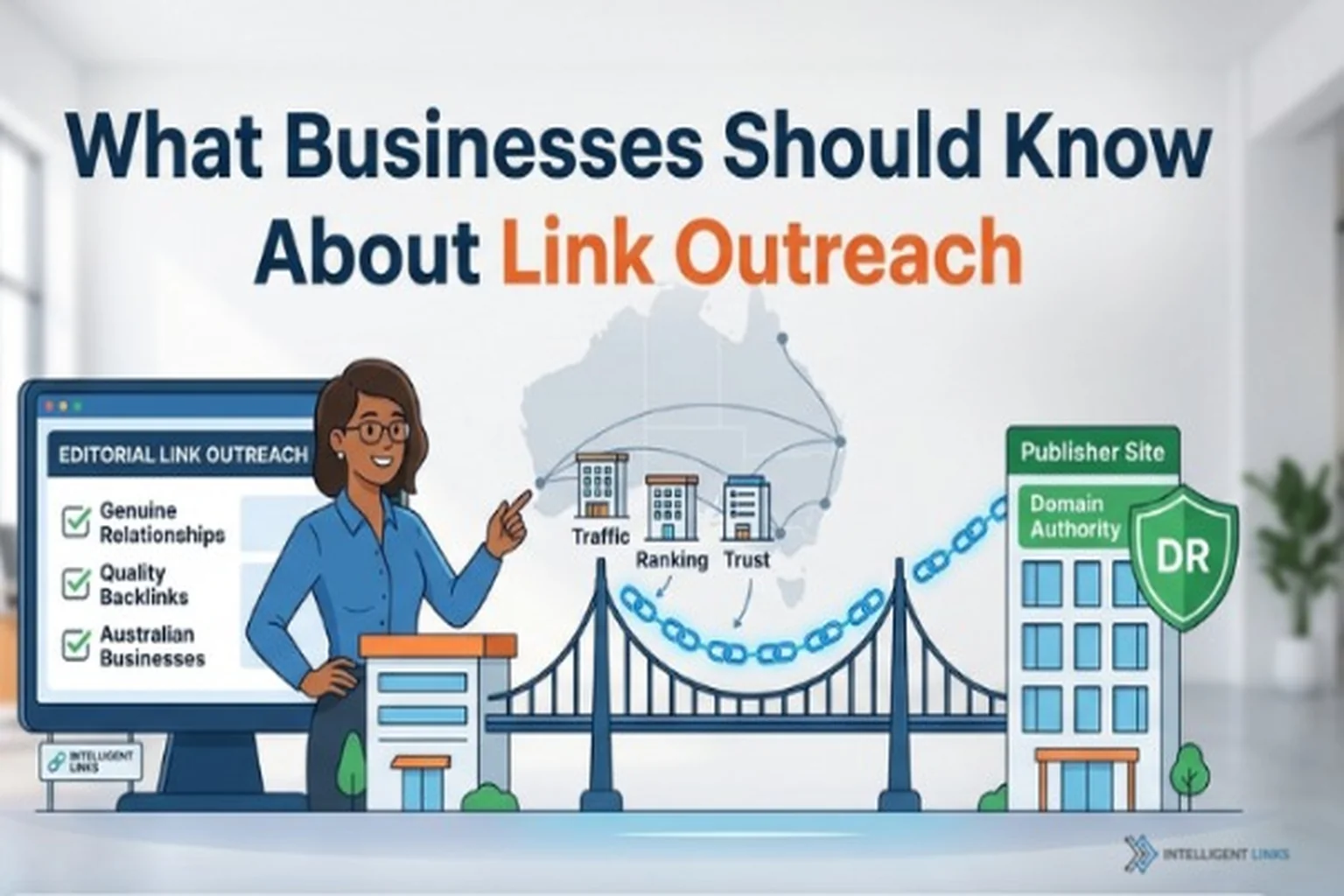
This often leads to confusion about which links actually help improve search engine rankings. Here at Intelligent Links, we handle editorial link outreach services for Australian businesses by placing quality backlinks on real publisher sites each month.
Now, in simple terms, link outreach means reaching out to site owners and publishers to earn backlinks through genuine relationships (no cold spam or shady link buying). Plus, search engines still count backlinks as a top-three ranking factor, so getting this right is important.
This article covers how link outreach works, which backlinks actually help, and common mistakes to avoid. You’ll also learn how to build long-term SEO value through genuine outreach.
Effective Backlink Strategies That Still Work: Outreach, Guest Posts, and Link Building
The most effective backlink acquisition methods rely on genuine relationships, quality content, and editorial placement on reputable sites. Here’s what to focus on and why each approach works.
Why Not All Backlinks Are Equal
A link from a relevant, high-authority website is far more valuable than dozens of random ones. After all, search engines don’t just count how many links you have.
Instead, they look at who’s linking to your website, the amount of organic traffic that site receives, and how naturally the link fits within the content. Because of these factors, a single well-placed link can perform better than a large number of low-quality links.
Guest Post Outreach Remains a Core Strategy
Guest post outreach means writing content for another website in exchange for an editorial backlink. It builds your site’s authority, sends referral traffic your way, and introduces your brand to readers who haven’t found you yet.
Of course, not every publication will deliver these results. You need to find posts on sites with genuine organic traffic and strong domain authority using SEO tools like Ahrefs or Semrush. Use them to verify traffic levels and authority before choosing where to publish.
Other Backlink Acquisition Methods Worth Considering
Guest posts are effective, but a strong link-building strategy uses more than one method. These are a few other approaches worth adding to the mix.
Broken Link Building
You find dead links on other websites and offer your content as a replacement. Site owners are usually open to this because it helps them fix a poor user experience. In return, you earn a quality backlink.
Unlinked Mentions
Sometimes other websites mention your brand without linking to you. Tools like Ahrefs or Google Alerts help you spot these. After you identify them, you can reach out with a short and polite email to request a backlink, since the site is already familiar with your brand.
Digital PR and SEO Partnerships
When journalists or bloggers cover your brand in a news piece or industry article, they’ll often link back to your site. These SEO partnerships through digital PR earn high authority backlinks and lift your brand awareness at the same time.
What Makes Authority Backlinks Valuable?
As we mentioned, not every backlink helps your site climb the rankings. However, the ones that do share a few common traits, and search engines pay close attention to each one:
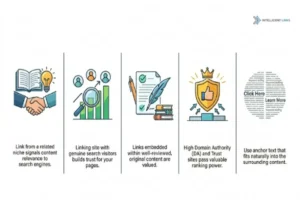
- Topical Relevance: A backlink from a site in your niche signals to search engines that your content is relevant to that topic and should be part of that search context.
- Real Organic Traffic: If the linking site pulls in genuine visitors through search, that’s a strong trust signal for your pages, too.
- Editorial Standards: Publishers give more weight to links embedded in properly reviewed, original content than to those buried in directories or comment sections.
- Domain Authority and Trust: The higher a site’s DA, the more authority and ranking power it passes through each link it gives, which can improve your search visibility.
- Natural Anchor Text: Forced or keyword-stuffed link text raises can signal to search engines that the link was added just to manipulate rankings. The best links use anchor text that fits the surrounding sentence naturally instead.
Even a handful of backlinks with these traits will outperform hundreds of weak ones. So focus your outreach strategy on earning links that hit these benchmarks consistently.
Common Mistakes Businesses Make When Building High Quality Backlinks
Most link-building campaigns don’t fail because the strategy is wrong. Instead, the reason comes down to a few avoidable mistakes that they keep repeating. Let’s look at the biggest ones and how to dodge them.

Chasing Metrics Instead of SEO Value
A high domain rating (DR) may look good on a spreadsheet, but it doesn’t reflect how useful a site is for SEO on its own. Because some sites inflate their DR using spammy networks, which means links from them add little SEO value.
Instead of focusing only on the score, the better approach is to check whether the linking site is relevant to your niche and actually receives genuine organic traffic.
Buying Cheap Links and Shortcuts
It’s tempting to go with cheap link-building services that promise quick wins. As mentioned earlier, they almost always rely on low-quality or spammy sites to place those links.
Once Google’s SpamBrain system spots the pattern, it can devalue those links within days. In more serious cases, your site could disappear from search engine results pages altogether.
Treating Outreach Like a Numbers Game
Most businesses send hundreds of generic emails to random site owners and wonder why nobody replies. The truth is, editors see these copy-paste templates every day and delete them without a second thought.
Personalised outreach is more likely to catch a publisher’s attention because it’s customised to their website and recent content. That extra relevance often translates into better results and more accepted pitches.
Ignoring Technical SEO Foundations
Backlinks help search engines find your pages, but your website still needs to perform well once visitors arrive. If users land on slow-loading pages, run into indexing errors, or face a poor user experience, even strong backlinks won’t be enough to improve rankings.
Believe it or not, we often see businesses build quality backlinks but still struggle to rank because of unresolved technical issues on their site.
Overusing Keyword-Rich Anchor Text
Anchor text is the clickable text inside a hyperlink. If most of your backlinks use the exact same keyword phrase, Google’s spam filters will pick up on that pattern and flag it.
The fix is a natural backlink profile that includes a healthy mix of branded terms, generic phrases, and varied anchor text. That variety will signal to search engines that you earned your links naturally.
How Long Does It Take to See Results?
Outreach, content creation, and publisher approvals alone can take several weeks. Then, after a link goes live, Google still needs around 6 to 10 weeks to crawl, index, and weigh it.
So most campaigns show movement within 3 to 6 months. This means you need to stay consistent and set realistic expectations beforehand.
Build SEO Partnerships That Help Traffic Grow Long Term
So, now that you know how link outreach works and which mistakes to avoid, what’s the next step?
Well, a good SEO partnership can help you build authority, bring in referral traffic, and show up higher across search engine results pages. And as those quality backlinks accumulate, your brand awareness and trust will grow right alongside them.
But before you hire anyone, we recommend asking these few questions:
- Do they target relevant, high-authority websites?
- Can they prove their outreach is real and not just paid placements?
- Do the sites they work with actually receive organic traffic?
This way, you can make sure you’re choosing the right partner and avoiding low-quality or ineffective services.
If that sounds like what you’re after, Intelligent Links handles the full link-building process for Australian businesses. We earn editorial placements on real publisher sites, so your search rankings will keep improving month after month.
