
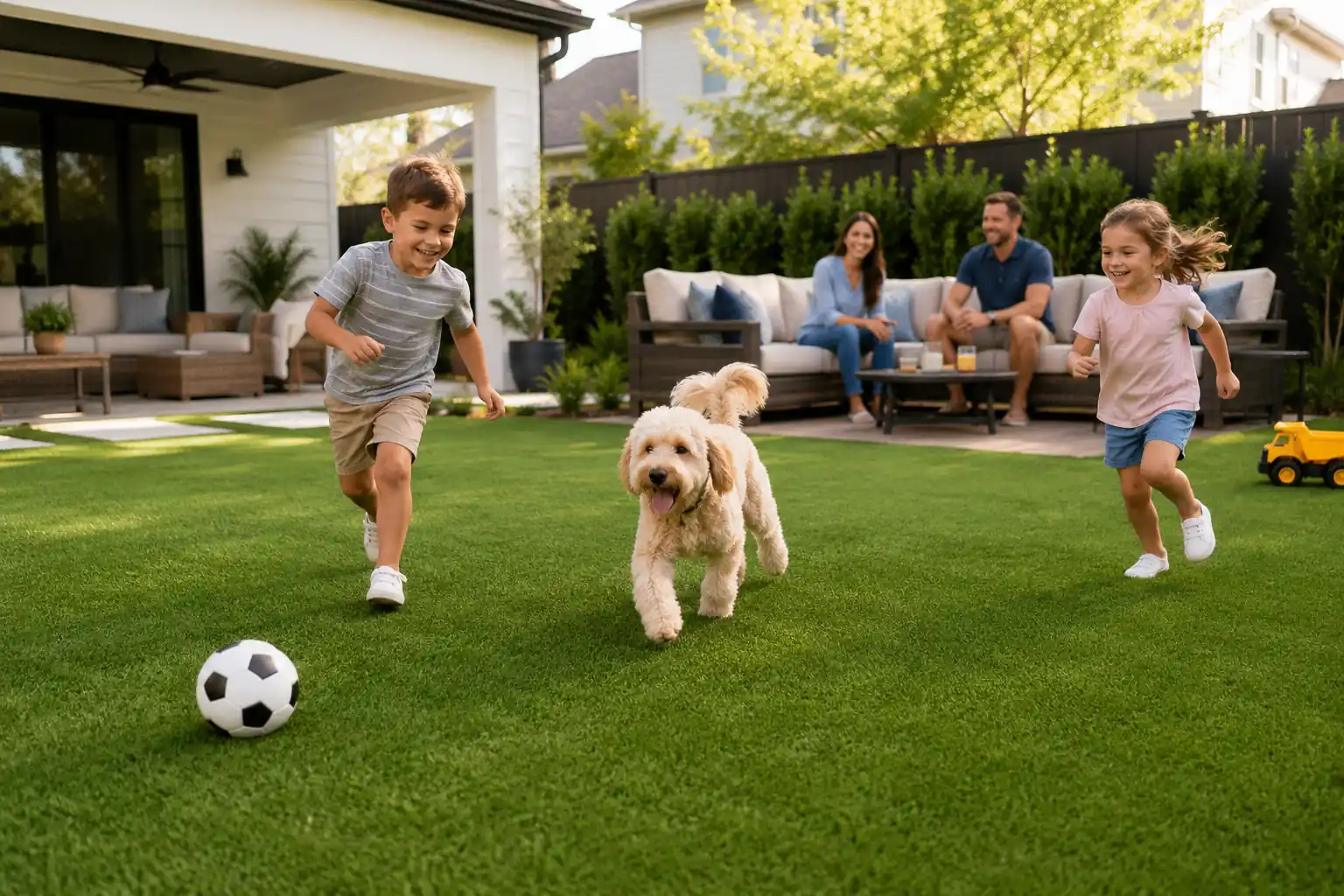
Switching from natural grass to synthetic turf marks a pretty significant change for any household, especially when kids and pets treat the backyard like their personal playground. This transition touches everything from your weekend routine to how your outdoor space actually functions day-to-day. Families who’ve taken the plunge consistently point out several differences that show up right away and stick around for the long haul.
Getting a handle on these changes helps you figure out whether synthetic turf makes sense for your particular situation. What follows reflects the real-world experiences that households tend to share after they’ve installed artificial grass.
Dramatic Reduction in Muddy Paw Prints and Dirty Footprints
The difference hits you almost immediately after it rains or your sprinklers finish their cycle. Natural grass turns into a soggy mess, spawning muddy patches that your dog happily tracks across your freshly mopped kitchen floor and your kids deposit on every carpet in the house. Synthetic turf comes equipped with drainage systems that move water through at impressive speeds, typically over 30 inches per hour, according to the Synthetic Turf Council.
Your pets can romp around outside during a downpour or right after without transforming into mud monsters. This means you’ll spend way less time cleaning floors, wrestling with dirty paws, and treating stains on your furniture and rugs. The mud situation practically vanishes, which also means fewer emergency bath sessions for your pets. If you’ve ever tried bathing a large dog who really doesn’t want a bath, you’ll appreciate this change.
Kids can dash outside to play without you stressing about grass stains on their favorite clothes or dirt trails leading from the back door to their bedroom. The spontaneity factor goes up considerably when outdoor play doesn’t require a complete outfit change afterward.
Elimination of Brown Patches and Constant Yard Maintenance
Families with energetic pets know the struggle all too well; natural grass simply can’t keep up with the beating it takes from dogs running their daily zoomies and using the same spots over and over. The nitrogen in pet urine burns the grass into those telltale brown circles that need constant attention, while the worn-down pathways from kids and animals playing create bare patches that never quite recover.
Once you’ve switched to synthetic turf, your yard stays consistently green and even regardless of how much action it sees. That frustrating battle to grow anything in the shady corner or the area near the back fence? Gone completely.
Enhanced Safety and Comfort During Playtime
The surface quality really changes how your children and pets interact with the backyard. Modern synthetic turf installations often include padding underneath that creates a cushioning effect, which softens the blow when kids take tumbles during active play. You’ll probably notice your children feel more comfortable running around barefoot and sitting directly on the ground compared to natural grass, which can feel prickly, uneven, or hide unwelcome surprises like sticks and small rocks.
The consistent surface eliminates those divots, holes, and uneven spots that create tripping hazards, particularly important when you’ve got younger kids still working on their coordination. Your pets benefit from the absence of all those chemicals homeowners typically spread on natural lawns to keep them looking decent. These pesticides, herbicides, and fertilizers can irritate paws, trigger allergic reactions, and create health concerns if pets ingest them while grooming themselves.
The synthetic material itself doesn’t provide the habitat that fleas, ticks, and other pests typically enjoy in natural grass environments. For homeowners who want to practice their short game at home, putting green turf provides the same durability and consistent surface quality that makes it ideal for family recreation areas. Many families mention their pets choosing to spend more time outdoors because the surface stays comfortable across different weather conditions without turning uncomfortably hot in moderate climates when the right infill materials are used.
Simplified Cleanup of Pet Waste and Spills
Dealing with pet waste becomes noticeably more straightforward with synthetic turf compared to natural grass. You’ll find that solid waste stays right on the surface instead of settling down into grass blades and soil, making it easy to spot and remove completely.
The non-absorbent quality of artificial turf means liquids drain straight through without leaving behind moisture that breeds odors or bacteria. Rinsing the areas where your pets regularly do their business becomes a simple part of your routine rather than an endless struggle against dead grass and lingering smells.
Conclusion
Making the switch to synthetic turf creates some pretty noticeable shifts in daily life for families managing both children and pets, mostly centered on less maintenance work, better cleanliness, and getting more actual use from outdoor spaces. These experiences reflect practical benefits that mesh well with the hectic schedules and active lifestyles most modern families juggle.
The disappearance of mud, the consistently green appearance, the improved safety aspects, and the simplified cleanup all contribute to an outdoor environment that’s actually enjoyable to spend time in. Understanding what other families commonly experience helps you make a more informed decision about whether synthetic turf fits your household’s specific situation. The investment in artificial grass ultimately shifts your focus from spending time maintaining your yard to actually using and enjoying it.
