
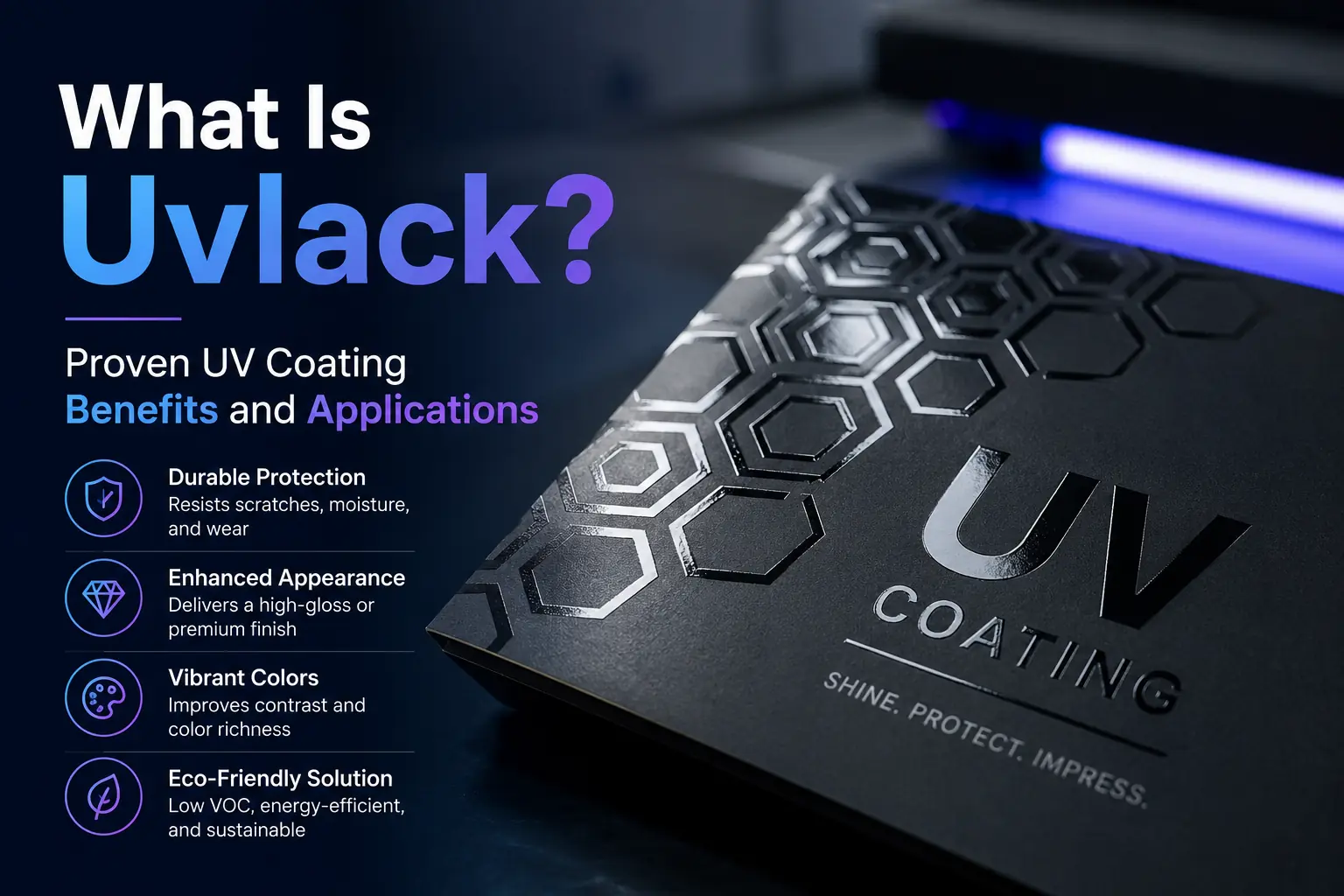
If you’ve ever run your finger across a box that felt unusually smooth and glossy, or noticed how some printed materials resist scuffing even after weeks of handling, you’ve already experienced uvlack in action. This UV-curable lacquer sits at the heart of modern surface finishing — used across printing, furniture, electronics, and automotive manufacturing to protect surfaces and elevate how products look and feel.
- What Is Uvlack? Meaning, Definition, and Simple Explanation
- How Uvlack Works
- Main Purpose of Uvlack Coatings
- Key Features and Benefits of Uvlack
- Fast Production Speed
- Strong Surface Protection
- Improved Appearance and Finish Quality
- Environmental and Cost Advantages
- Types of Uvlack Coatings
- Where Uvlack Is Used in Real Industries
- Printing and Packaging
- Furniture and Wood Finishing
- Automotive Interiors
- Electronics and Consumer Devices
- Industrial and Specialty Applications
- DIY and Promotional Items
- Uvlack vs Traditional Coatings and Alternatives
- Application Tips and Common Mistakes
- Environmental Considerations, Safety, and Sustainability
- How to Choose the Right Uvlack
- Limitations and Challenges of Uvlack
- Maintenance and Longevity of Uvlack Finishes
- Future of Uvlack and UV Coating Technology
- Conclusion
- FAQs
This guide breaks down everything you need to know: the meaning, the science, real-world applications, and how to choose the right option for your project.
What Is Uvlack? Meaning, Definition, and Simple Explanation
Uvlack combines two words: “UV” (ultraviolet light) and “Lack” — the German word for lacquer or varnish. Together, they describe a UV-curable surface finish that stays liquid until exposed to ultraviolet light, at which point it hardens within seconds into a tough, protective film.
Unlike traditional varnishes that depend on air drying or heat to cure, this coating technology uses a controlled photochemical reaction. The result is a hard film that can be glossy, matte, satin, soft-touch, clear, or textured depending on the formulation.
It’s not paint. Paint adds color. Uvlack is applied as a finishing layer — its job is to protect, strengthen, and visually refine whatever sits beneath it. That distinction matters when you’re choosing between finishing options for industrial or commercial use.
How Uvlack Works
The process sounds complex, but the core idea is straightforward: apply a liquid coating, expose it to UV light, and it becomes solid.
Chemical Formulation
The coating contains four key ingredients working together:
- Oligomers — form the structural backbone and determine hardness and flexibility
- Monomers — control viscosity and influence how the coating spreads and cures
- Photoinitiators — absorb UV energy and trigger the polymerization chain reaction
- Functional additives — include stabilizers, anti-yellowing agents, and flow-control compounds
Because this system avoids solvents, VOC emissions stay low during the curing process. That makes it a more responsible choice than many traditional solvent-based finishes, both for workers and for environmental compliance.
Surface Preparation and Application Methods
No coating performs well on a dirty or poorly prepared surface. Dust, oil, and contaminants prevent proper adhesion and lead to uneven curing. Most applications require a clean, dry substrate, and porous materials often need primers first.
Application method depends on the job:
| Method | Best Used For |
| Roller coating | Flat panels and high-volume production lines |
| Spray coating | Complex shapes and irregular surfaces |
| Screen printing | Spot coating on selected design areas |
| Flood coating | Full-surface coverage in a single pass |
Each method has its place. Choosing the wrong one is one of the most common causes of finish inconsistency.
UV Curing Process
Once applied, the piece passes under UV lamps. The radiation activates the photoinitiators, triggering instant polymerization. Most coatings reach full cure within 1–5 minutes, depending on layer thickness and lamp intensity.
Undercuring leaves the surface tacky and weak. Overcuring can degrade sensitive substrates. Modern energy-efficient curing systems — including LED UV lamps — have made it easier to control exposure precisely, reducing errors and improving consistency across production runs.
Main Purpose of Uvlack Coatings
At its core, this finishing technology serves two goals at once: protection and appearance.
On the protection side, it resists scratches, abrasion, moisture, and chemical contact — the everyday stresses that wear down uncoated surfaces quickly. On the appearance side, it deepens color richness, adds gloss or matte refinement, and gives products a visual quality that makes them feel premium before a customer even picks them up.
That dual purpose is why so many industries adopted it. A furniture panel needs to look beautiful and survive years of use. A printed brochure needs vibrant color and durability through distribution. Uvlack handles both demands simultaneously.
Key Features and Benefits of Uvlack
Fast Production Speed
The instant curing ability is the feature that first draws most manufacturers in. Traditional coatings demand hours — sometimes days — of drying time. This coating cures in seconds under UV exposure, allowing immediate handling, stacking, and shipping.
That speed directly translates to higher-volume output without sacrificing quality. Production lines move faster, storage requirements shrink, and the risk of handling damage before the finish fully sets drops significantly.
Strong Surface Protection
The cross-linked polymer network created during curing delivers genuine toughness. Surfaces resist scratching, rubbing, and light moisture exposure — the kinds of wear that printed packaging and furniture surfaces accumulate over time.
UV blockers in the formulation also prevent fading from sunlight exposure, which matters for products displayed outdoors or near windows. The result is a finish that maintains its appearance significantly longer than uncoated alternatives under the same conditions.
Improved Appearance and Finish Quality
From mirror-like gloss to a velvety soft-touch feel, the range of finishes available gives designers and manufacturers real control over how a product looks and feels. A luxury cosmetics box might use a high-gloss finish to signal premium quality. A modern furniture panel might use matte to project understated elegance.
That flexibility — one coating system serving both ends of the aesthetic spectrum — is why it has displaced older finishing methods across so many sectors.
Environmental and Cost Advantages
Many formulations produce significantly lower VOC emissions than traditional solvent-based coatings. Faster curing also reduces energy consumption compared with thermal drying systems. Over time, the reduction in drying time, labor, and material waste makes it cost-efficient even when the initial UV system investment is higher.
Types of Uvlack Coatings
Not all formulations perform the same way. The main types include:
- Gloss — high-shine, reflective surface; deepens color and signals premium quality
- Matte — low-sheen, non-reflective; suits minimalist and luxury packaging
- Satin — sits between gloss and matte; subtle sheen with good depth
- Soft-touch / velvet — tactile, velvety surface texture; widely used in cosmetics and electronics packaging
- Clear — protects without changing the base appearance; preserves natural textures like wood grain
- Scratch-resistant — engineered for high-contact surfaces like automotive parts and electronics
- Textured / raised — adds physical dimension through spot applications; creates visual and tactile contrast
Brands choose based on appearance goals, product use, and the substrate being coated.
Where Uvlack Is Used in Real Industries
Printing and Packaging
This is where it sees the highest volume of use. Labels, brochures, business cards, folding cartons, luxury boxes, and magazine covers all benefit from UV coating. Color saturation improves, handling wear decreases, and shelf appeal increases — often without redesigning the artwork at all.
Spot UV is a popular technique in this sector: high-gloss coating applied selectively to logos or headlines while the surrounding area stays matte. The contrast draws attention exactly where the designer intends and adds a tactile quality that flat printing cannot replicate.
Furniture and Wood Finishing
Cabinet makers, flooring manufacturers, and decorative panel producers rely on UV-cured lacquer for its protective durability. A finished kitchen cabinet resists moisture, cleaning agents, and repeated scratching far better than one finished with standard varnish. The coating also maintains color clarity over time, avoiding the yellowing that affects some older systems.
Automotive Interiors
Dashboards, door panels, interior trim pieces, and decorative surfaces in modern vehicles are frequently finished with UV-cured coatings. These components must survive years of UV exposure, temperature changes, and constant physical contact — all while continuing to look refined. This finishing technology handles those demands reliably.
Electronics and Consumer Devices
Smartphones, tablets, and laptop casings use UV coating to deliver fingerprint resistance, scratch protection, and a premium tactile feel. For products where appearance and longevity both matter from day one, it’s a natural fit.
Industrial and Specialty Applications
Metal panels, machinery parts, aerospace components, and architectural glass panels also use UV-curable finishes for corrosion resistance and surface protection. Circuit boards benefit from protection against dust and humidity. Even 3D-printed parts are finished with UV coating to improve surface quality and durability.
DIY and Promotional Items
Custom jewelry, phone cases, and smaller craft projects increasingly rely on UV resins for their speed and finish quality. Beauty packaging brands also favor this approach for the glass-like gloss it delivers on smaller promotional runs.
Uvlack vs Traditional Coatings and Alternatives
Uvlack vs Regular Varnish
Regular varnish relies on air or heat to dry, which slows production considerably. UV coating’s instant cure gives a clear productivity edge. Gloss control and durability also favor UV, though traditional varnish remains cheaper to set up for simpler jobs.
Uvlack vs Aqueous Coating
Aqueous coating is water-based and more flexible, making it better suited for packaging with tight folds or deep scores where brittleness would cause cracking. UV coating delivers stronger gloss but can fail mechanically under heavy creasing. Packaging designers often choose based on fold requirements, not just finish preference.
Uvlack vs Lamination
Laminate adds a physical film rather than a surface coating, offering stronger protection against tearing and cracking on thicker materials. UV coating provides a similar premium look at lower cost, but laminate outperforms it when maximum physical durability is the priority. Repairability also differs — UV finishes can be recoated after light sanding; laminate cannot.
Uvlack vs Black Epoxy Resin
Black epoxy resin is a two-part system — resin and hardener — that cures through chemical reaction rather than UV light. It takes hours, not seconds, but produces extremely high strength and handles thick layers well. UV resins suit thin coatings and detail work. Some professionals combine both: epoxy for structural base strength, UV resin on top for finish and clarity.
Application Tips and Common Mistakes
Consistently good results come down to process discipline, not just product quality. A few practical points that matter:
- Always work in a clean environment — dust contamination causes visible defects in the cured surface
- Apply thin, consistent layers; thick coats cause bubbles, uneven curing, and adhesion failure
- Invest in a quality UV lamp — weak lamps cause undercuring regardless of how good the coating is
- Keep uncured materials away from sunlight to prevent premature hardening
- Use gloves and eye protection throughout the operation
- Sand lightly between layers on multi-layer builds to improve adhesion
- Polish the final surface for maximum shine on display or jewelry applications
Environmental Considerations, Safety, and Sustainability
Many UV coating systems have made genuine progress on environmental performance. Low-VOC formulations reduce air pollution compared with solvent-heavy alternatives. Energy-efficient curing — particularly LED UV systems — lowers carbon footprint versus thermal drying methods.
Workers must still follow safety protocols. Direct UV exposure can damage the skin and eyes, making protective equipment essential. Proper ventilation and disposal practices keep operations compliant with current environmental regulations.
On recyclability: this is a growing concern for brands committed to circular packaging. Older UV systems complicated the deinkability of coated paper, but newer deinkable UV varnish formulations have improved compatibility with paper and board recycling streams. The chemistry and board type both affect the outcome — selecting the right formulation matters as much as selecting the right gloss level.
How to Choose the Right Uvlack
Start with the substrate. Wood, metal, and plastic each respond differently and require different formulations. Outdoor applications need UV-stable products with built-in weather resistance. Indoor packaging jobs can prioritize gloss and cost.
Key questions to answer before specifying:
- What material is being coated?
- Is the application indoor or outdoor?
- What gloss level does the design require?
- Will the packaging involve tight folds or deep scores?
- Are there food contact or pharmaceutical compliance requirements?
- Is the existing UV lamp compatible with the chosen formulation?
Answering these before production starts prevents expensive defects and wasted runs.
Limitations and Challenges of Uvlack
No finishing technology is perfect for every situation. UV curing equipment represents a significant upfront investment, particularly for smaller operations. Formulations without proper stabilizers can yellow over time. Porous materials require sealing before application, or adhesion fails.
UV shadowing is another real concern: on complex or irregular shapes, areas that receive insufficient UV light exposure may cure incompletely. Thick coating layers prevent full curing through the depth of the film. And without properly trained operators, even high-quality products produce inconsistent results.
Understanding these limitations before committing to the technology is simply good practice.
Maintenance and Longevity of Uvlack Finishes
A properly applied UV-cured finish can maintain its appearance for several years. Regular cleaning with mild detergents preserves surface integrity without damaging the coating. Avoid abrasive cleaners — they dull the finish over time.
Outdoor applications need UV-stable formulations from the start. Recoating is possible after light sanding when surface wear becomes visible. The coating rarely fails structurally; gloss diminishment from heavy use is the more common reason for refinishing.
Future of Uvlack and UV Coating Technology
LED UV curing is already replacing traditional mercury vapor lamps in many facilities. LED systems consume less energy, generate less heat, and last longer — making them a smarter long-term investment for manufacturers.
Nano-additive formulations are creating multifunctional variants with anti-fingerprint, antimicrobial, and self-cleaning properties. These open new applications in medical devices, smart packaging, and renewable energy panel coatings.
The UV coatings sector continues to grow, driven by sustainability regulations and industrial demand for faster, cleaner production. AI-based exposure control systems are beginning to appear in advanced production environments, adjusting UV intensity in real time based on surface reflectance data. The direction is clear: more capable, more sustainable, and more precise.
Conclusion
Uvlack is not a trend — it’s a mature finishing technology built on real performance advantages. Its combination of instant curing, genuine durability, low environmental impact, and wide aesthetic flexibility makes it hard to match for applications where surface quality matters.
From packaging and printing to furniture, automotive interiors, and industrial components, this UV-curable coating continues to shape how modern products look, feel, and last. As LED UV technology matures and nano-additive formulations expand what’s possible, its role in surface engineering will only grow stronger.
FAQs
What is Uvlack in simple words?
Uvlack is a liquid coating that hardens instantly under ultraviolet light. It’s applied to surfaces like paper, wood, plastic, and packaging to protect them and improve their appearance — producing a glossy, matte, or other decorative finish depending on the formulation.
How does Uvlack work?
The coating contains photoinitiators that react when UV light hits them. This reaction — called polymerization — links liquid molecules into a solid, cross-linked surface film within seconds. UV lamps control the curing; the result is a durable, protective layer ready for immediate handling.
What is the difference between full UV and spot UV?
Full UV covers the entire surface evenly, improving overall gloss and protection. Spot UV applies the coating selectively — only to logos, titles, or specific design elements — while the rest stays matte. The contrast between the glossy accent and the flat background creates a tactile, visual effect that draws the eye.
Is Uvlack better than traditional coatings?
For production speed, durability, and finish variety, yes. UV coatings cure in seconds, resist scratching better than standard varnish, and produce far lower VOC emissions than solvent-based alternatives. Traditional varnish, laminate, and aqueous coating still have roles, but UV coating outperforms them in most high-demand scenarios.
Is Uvlack safe and eco-friendly?
Most modern formulations are significantly safer than older solvent-based coatings, producing lower emissions and requiring less energy to cure. Food contact compliance depends on the specific product — low-migration formulations exist for food packaging, but always verify before use. Proper protective equipment is still essential during application.
Can Uvlack be used outdoors?
Yes, but only when using UV-stable formulations that contain stabilizers. designed for weather resistance. Regular indoor formulations will fade and deteriorate when exposed to prolonged sunlight. Always specify outdoor-rated products for exterior applications.
Does Uvlack yellow over time?
High-quality formulations include anti-yellowing agents that prevent discoloration over time. Lower-grade products without adequate stabilizers can yellow — particularly in applications with significant sunlight or heat exposure. Color clarity and long-term appearance depend heavily on formulation quality.
How long does a Uvlack finish last?
With proper application and surface preparation, a UV-cured finish can last several years even on high-traffic surfaces like kitchen cabinetry and flooring. Lifespan depends on usage intensity and environmental exposure. Recoating after light sanding restores appearance when gloss diminishment becomes visible.
