
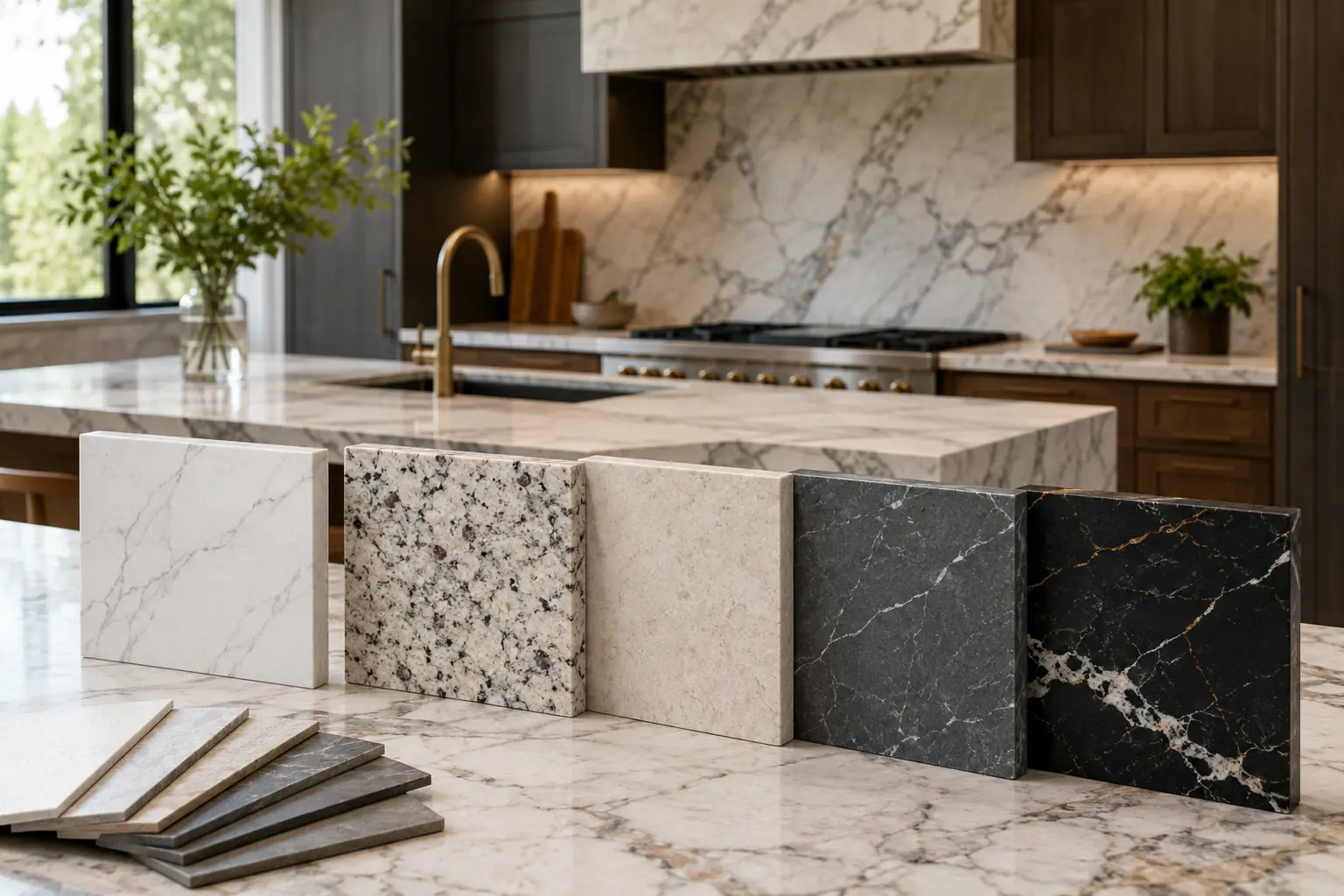
Choosing the right stone for a kitchen renovation can transform the look, functionality, and long-term value of your space. The challenge is that there are now more options available than ever before, each offering different benefits in appearance, durability, maintenance, and cost.
What looks ideal in a showroom may not always suit the demands of everyday kitchen use. Taking the time to understand the differences between materials can help you make a decision that performs well for years.
Why Stone Choice Matters
A kitchen benchtop is one of the most heavily used surfaces in any home. It is exposed to heat, moisture, spills, food preparation, impacts, and daily wear. Because of this, the type of stone you choose directly affects how the surface performs over time.
Different stone materials vary in porosity, scratch resistance, stain resistance, and heat tolerance. Some require regular sealing and maintenance, while others are designed to be low-maintenance. Choosing the wrong material for your lifestyle can lead to ongoing upkeep, premature wear, or unnecessary repair costs. Selecting the right one helps ensure long-term practicality as well as appearance.
Popular Stone Options for Kitchens
Engineered stone is one of the most commonly used options in modern kitchens. It is typically non-porous, which makes it highly resistant to staining and easy to clean. Its consistent colour and pattern also appeal to homeowners looking for a clean, uniform finish. Heat resistance can vary depending on the product, so the use of trivets is still recommended.
Natural stone remains popular for its unique and organic appearance. Materials such as granite and quartzite offer natural variation that cannot be replicated. Granite is known for its strength and heat resistance, while quartzite is valued for its hardness and durability. These materials can last for many years but generally require periodic sealing to maintain protection against stains and moisture.
Porcelain has also become a strong choice for kitchen renovations. It offers excellent resistance to stains, scratches, heat, and UV exposure. It is low-porosity and well-suited to high-use kitchens. Many homeowners also choose porcelain for its ability to replicate the appearance of natural stone while providing different performance benefits.
Matching Stone to Lifestyle Needs
The most suitable stone is often the one that aligns with how the kitchen is used daily. Busy households usually benefit from surfaces that are low-maintenance and resistant to frequent spills and heavy use. Non-porous materials are often preferred in these environments.
Homeowners focused on design may prefer natural stone for its character, movement, and variation. Materials like granite and quartzite can create a strong visual feature that enhances the overall kitchen design.
For those who cook often or entertain regularly, durability and heat resistance become more important. Understanding how each material reacts to hot cookware, impact, and daily use helps ensure a more practical long-term choice.
Common Mistakes Homeowners Make
One of the most common mistakes is choosing stone based only on appearance. While visual appeal is important, performance and maintenance requirements should also be considered.
Another issue is underestimating long-term care. Some natural stones require sealing to maintain resistance to stains and moisture. Without this understanding, homeowners may be surprised by maintenance needs after installation.
Durability expectations can also be unrealistic. Every material has limitations, and understanding how each surface responds to heat, impact, and daily wear helps avoid disappointment later.
Working with Professionals
Comparing stone materials can be challenging without expert advice. Similar-looking slabs can perform very differently in real use, particularly in terms of maintenance, durability, and suitability for specific kitchens.
Consulting Sydney stone suppliers can help homeowners make more informed decisions. Experienced suppliers can explain material differences, recommend suitable finishes, and provide guidance based on practical kitchen use rather than appearance alone.
Professional input also helps ensure the selected stone meets relevant standards and is suitable for Australian kitchen environments.
Balancing Budget and Quality
Budget is always an important consideration in kitchen renovations. Stone materials vary in price depending on type, sourcing, manufacturing, and installation requirements.
While upfront cost is important, long-term value should also be considered. A higher-quality material that lasts longer and requires less maintenance may offer better overall value than a cheaper option that needs repair or replacement sooner.
Selecting stone as a long-term investment rather than a short-term expense often leads to better performance and improved kitchen durability.
Making the Right Choice for Your Renovation
A successful kitchen renovation balances appearance, practicality, maintenance, and budget. Each household has different priorities, so there is no single stone type that suits every situation.
Understanding how each material performs in real conditions helps ensure the final result is both visually appealing and functional. Before making a decision, it is important to compare materials properly and seek advice from trusted Sydney stone suppliers when needed.
A considered approach to stone selection can improve long-term satisfaction and ensure the kitchen remains functional and visually strong for years.
FAQs
Which stone material is easiest to maintain in a kitchen?
Engineered stone is generally the easiest to maintain because it is non-porous and does not usually require sealing.
Is natural stone better than engineered stone?
Neither is universally better. Natural stone offers a unique appearance and character, while engineered stone provides easier maintenance and consistency.
Does granite require sealing?
Yes. Granite is porous and typically requires periodic sealing to maintain resistance to stains and moisture.
Is porcelain suitable for kitchen benchtops?
Yes. Porcelain is highly resistant to stains, scratches, heat, and UV exposure, making it suitable for kitchens.
What is the most durable stone for kitchen use?
Granite, quartzite, porcelain, and engineered stone are all known for strong durability, depending on usage and environment.
How do I choose the right stone for my kitchen?
Consider maintenance requirements, cooking habits, durability needs, design preferences, and budget. Professional advice can help refine the choice.
