
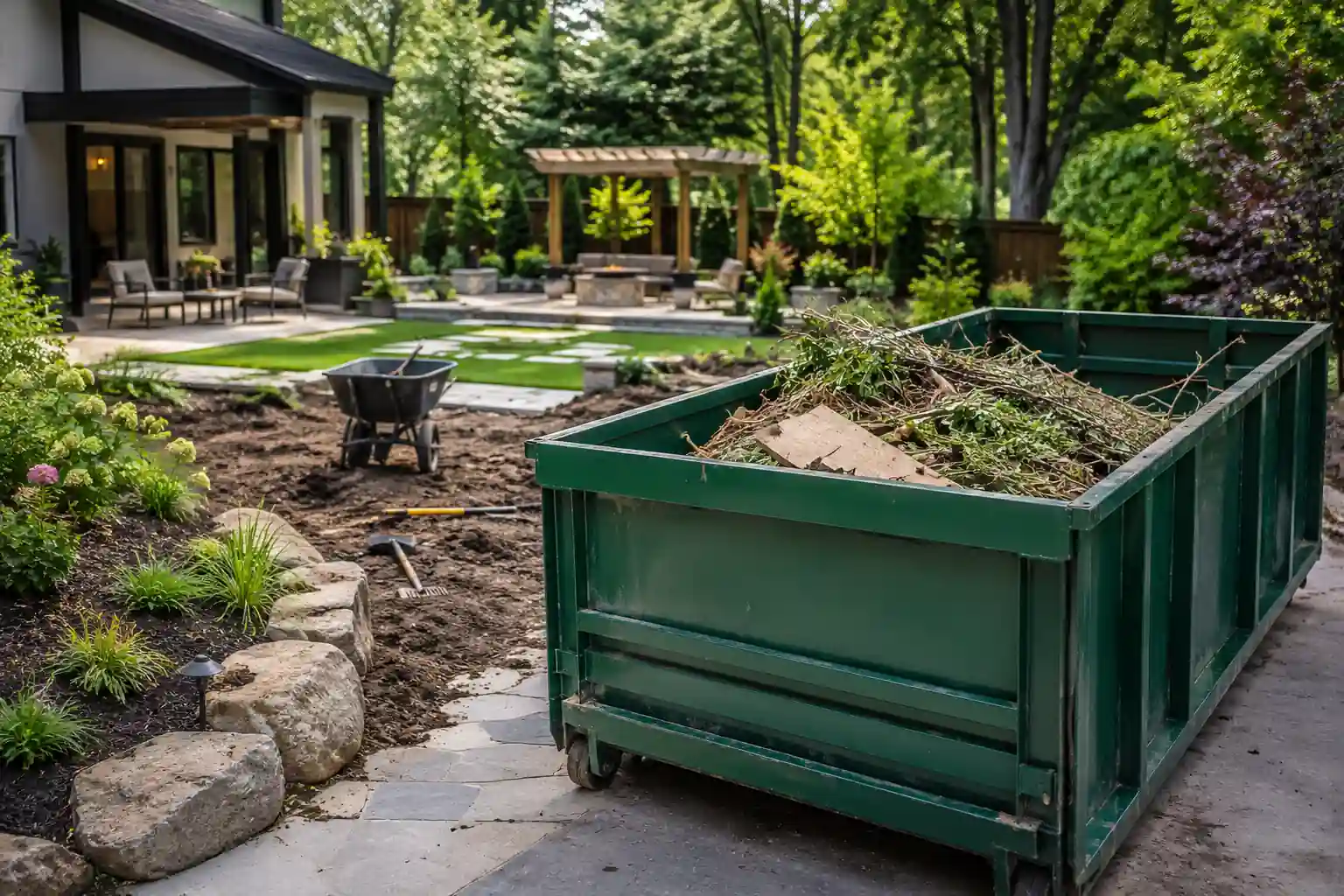
Complete backyard transformation projects can dramatically change the appearance, functionality, and value of a property. From installing patios and retaining walls to building outdoor kitchens, replacing landscaping, adding drainage systems, and creating custom outdoor living spaces, these projects often involve far more debris than many clients expect. For landscapers, managing that waste efficiently is a critical part of maintaining productivity and keeping projects on schedule.
- Why Backyard Transformations Generate Large Volumes of Waste
- Planning Waste Removal Before Work Begins
- Coordinating Dumpster Use with Project Phases
- Managing Demolition and Removal Debris
- Using Centralized Disposal Systems
- Supporting Equipment Operations
- Managing Soil, Vegetation, and Organic Materials
- Maintaining Access Around Residential Properties
- Reducing Labor Costs Through Efficient Cleanup
- Managing Material Deliveries and Packaging
- Adapting to Scope Changes During Construction
- Maintaining Professional Jobsite Conditions
- Avoiding Common Waste Management Mistakes
- Supporting Successful Backyard Transformations
Unlike smaller landscaping jobs that may only generate limited amounts of organic material, large backyard renovations often produce a mix of demolition debris, soil, vegetation, hardscape materials, packaging, and construction waste. Without a well-organized disposal plan, debris can quickly consume valuable workspace and slow progress throughout the project.
Effective dumpster planning helps landscapers maintain cleaner worksites, improve labor efficiency, and support smoother project execution from start to finish.
Why Backyard Transformations Generate Large Volumes of Waste
Most complete backyard renovations begin with removal work. Existing patios, decks, retaining walls, walkways, fencing, shrubs, trees, and outdated landscape features often need to be removed before new construction can begin.
As the project progresses, additional waste is generated from excavation, grading, hardscape installation, drainage improvements, and outdoor structure construction. New materials also arrive with pallets, cardboard, plastic wrap, and other packaging that contributes to overall debris volume.
Because waste is generated continuously throughout multiple phases of the project, landscapers need a disposal solution that can support the entire transformation rather than only the demolition stage.
Planning Waste Removal Before Work Begins
One of the best ways to maintain an efficient job site is to establish a waste management plan before equipment arrives on the property. Landscapers should evaluate the project scope, estimate debris volume, and determine how waste will be generated during each phase of construction.
Planning ahead allows contractors to identify the appropriate disposal solution, determine placement locations, and coordinate service schedules with major project milestones. It also helps prevent clutter from becoming a problem once demolition and excavation activities begin.
Preparation creates a stronger foundation for efficient project management.
Coordinating Dumpster Use with Project Phases
Different phases of a backyard transformation create different types and amounts of debris. Initial demolition and clearing stages often generate the largest waste volumes, while installation phases produce smaller but continuous streams of material.
Excavation, grading, hardscape installation, planting, and finishing work each create unique disposal needs. Coordinating dumpster usage with these stages helps ensure sufficient capacity remains available throughout the project.
Aligning disposal resources with construction activity helps maintain smoother workflow and reduces interruptions. Timing plays a major role in keeping landscaping projects on schedule.
Managing Demolition and Removal Debris
Many backyard renovations begin with removing old structures and landscape features. Patios, walkways, retaining walls, fencing, decks, and overgrown vegetation can create significant amounts of debris within a short period.
Allowing these materials to accumulate around the property can reduce available workspace and interfere with equipment operations. Prompt disposal helps keep active work zones clear and allows crews to transition more efficiently into excavation and installation phases.
Managing demolition debris effectively supports stronger project organization from the beginning.
Using Centralized Disposal Systems
A centralized disposal system simplifies cleanup throughout a large landscaping project. Rather than creating multiple debris piles around the property, crews can move waste directly into a designated container as materials are removed.
Working with providers such as Temporary Dumpster helps landscapers coordinate disposal solutions that support extensive backyard renovation projects. Centralized systems improve organization and reduce the amount of time workers spend transporting debris across the property.
This approach helps maintain cleaner jobsites and improves overall efficiency.
Supporting Equipment Operations
Large backyard transformation projects often require skid steers, mini excavators, compact loaders, trenchers, and other specialized equipment. Debris that accumulates around active work zones can interfere with equipment movement and reduce productivity.
Contractors should maintain clear pathways and coordinate cleanup efforts alongside construction activities. Organized waste removal helps preserve access and allows operators to work more efficiently throughout the project.
Clear work areas contribute directly to stronger operational performance. Organization supports smoother equipment movement and project flow.
Managing Soil, Vegetation, and Organic Materials
Many landscaping projects involve substantial amounts of soil, brush, roots, sod, and other organic materials. These debris streams can quickly consume valuable space if not addressed regularly.
Contractors should develop a strategy for handling organic waste alongside construction debris to prevent work areas from becoming overcrowded. Coordinated removal helps maintain better site organization and supports ongoing project progress.
Efficient handling of landscape materials contributes to cleaner and more productive jobsites.
Maintaining Access Around Residential Properties
Backyard transformation projects frequently take place while homeowners continue living in the home. Contractors must balance construction operations with the homeowner’s need to access driveways, garages, patios, and outdoor spaces.
Debris that accumulates near access points can create inconvenience and disrupt daily routines. Regular cleanup helps preserve accessibility and contributes to a more positive customer experience throughout the project.
Maintaining access is an important part of professional project management.
Reducing Labor Costs Through Efficient Cleanup
Repeatedly moving debris from one location to another increases labor costs and reduces productivity. Temporary staging piles often require workers to handle the same materials multiple times before final disposal.
Direct disposal into a centralized dumpster helps eliminate these inefficiencies by keeping debris moving continuously throughout the project. Landscapers who minimize repeated handling can focus more labor hours on productive installation work.
Reducing unnecessary movement supports stronger profitability and project efficiency.
Managing Material Deliveries and Packaging
Backyard transformations often involve deliveries of pavers, stone, lumber, plants, irrigation supplies, lighting components, and outdoor living products. These materials typically arrive with packaging that adds to the overall waste stream.
Cardboard, pallets, plastic wrap, and protective materials should be removed regularly to preserve staging areas and maintain jobsite organization. Managing packaging waste effectively supports smoother logistics throughout construction.
Organization helps prevent valuable workspace from being consumed by delivery materials.
Adapting to Scope Changes During Construction
Large landscaping projects frequently evolve after work begins. Homeowners may request additional features, expand outdoor living areas, or make design changes that increase both construction activity and debris generation.
Contractors should remain flexible and be prepared to adjust disposal plans as project conditions change. Additional capacity or revised service schedules may be necessary to support expanded scopes of work.
Adaptability helps maintain project momentum despite changing requirements. Preparation supports better long-term project management.
Maintaining Professional Jobsite Conditions
Homeowners often judge the quality of a landscaping company not only by the finished result but also by how the property is managed throughout construction. Excessive debris and clutter can create a negative impression and make projects appear disorganized.
Consistent cleanup helps maintain a professional appearance while improving safety and organization. Cleaner jobsites also allow homeowners to better visualize project progress as work advances.
Professional site management contributes to stronger customer satisfaction and referral opportunities.
Avoiding Common Waste Management Mistakes
Several common mistakes can reduce efficiency during backyard transformation projects. These include underestimating debris volume, delaying disposal planning, allowing waste to accumulate throughout the property, and failing to coordinate cleanup with project phases.
Another frequent issue is placing disposal containers too far from active work areas, increasing labor demands and slowing debris handling.
Avoiding these challenges requires proactive planning, continuous cleanup, and ongoing communication throughout the project.
Attention to operational details improves project outcomes.
Supporting Successful Backyard Transformations
Effective dumpster planning contributes directly to smoother landscaping operations. When waste is removed consistently, crews can work more efficiently, equipment access remains clear, and project phases progress with fewer interruptions.
This leads to improved labor productivity, cleaner jobsites, and stronger schedule control throughout the renovation. Landscapers who prioritize waste management are often better positioned to complete projects efficiently while delivering a better overall customer experience.
Efficiency improves when waste removal is integrated into the broader project strategy. Landscaping dumpster rentals play an important role in supporting complete backyard transformation projects. From demolition and excavation to hardscape installation and final landscaping, waste is generated throughout every stage of construction and must be managed effectively.
By planning disposal needs early, coordinating dumpster use with project phases, maintaining centralized cleanup systems, and adapting to changing project conditions, landscapers can keep large backyard renovations organized and productive from start to finish.
When waste management is treated as a core operational process, landscaping professionals can reduce delays, improve labor efficiency, and complete backyard transformation projects with greater consistency, professionalism, and control.
