
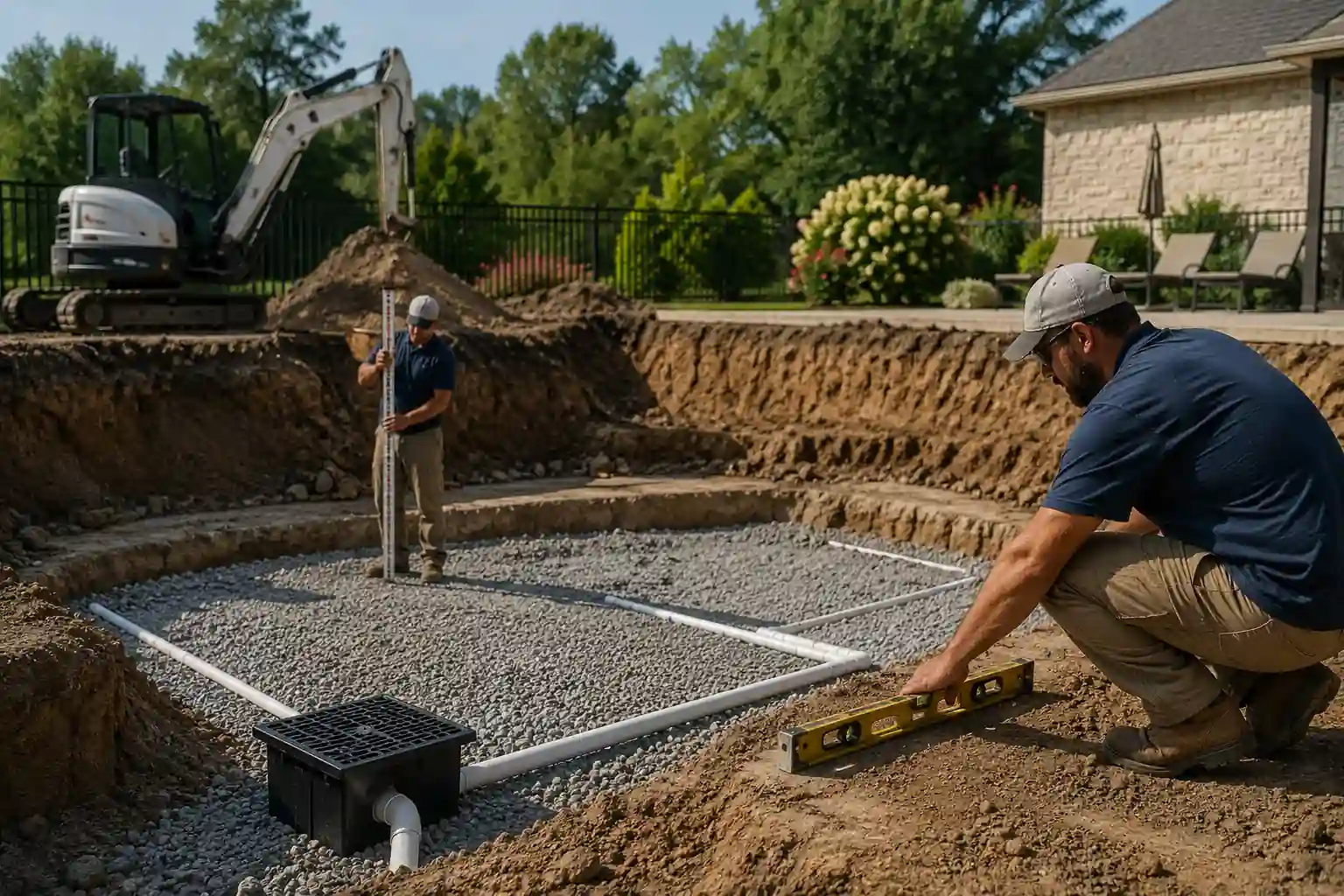
Proper drainage is one of the most important steps before pool construction begins. A pool changes how water moves across a yard, so installers must understand soil conditions, slope, runoff, groundwater, and nearby structures before digging starts. Poor drainage can lead to standing water, soil movement, deck damage, erosion, and pressure around the pool shell. Careful planning helps protect the pool area from future water problems and supports a cleaner, safer outdoor space. When drainage is addressed early, construction can proceed with fewer surprises and stronger long-term performance.
Drainage Comes First
-
Studying the Yard Before Digging
Pool installation crews begin drainage planning by studying how water already moves across the property. They look at the yard’s slope, low spots, nearby patios, downspouts, retaining walls, neighboring properties, and areas where water collects after rain. This review helps determine whether stormwater naturally flows away from or toward the pool area. If water already gathers in one part of the yard, placing a pool there without drainage planning can create ongoing problems.
Installers may also consider soil type, as clay-heavy soil retains water longer, while sandy soil drains faster. Homeowners planning Pool Installation in MN may need careful site review because seasonal rain, snowmelt, and freeze-thaw conditions can affect how water moves around a new pool. By studying the yard first, crews can plan grading, drainage lines, and pool placement before excavation begins. This helps reduce future pooling, erosion, and pressure around the pool structure.
-
Checking Soil and Groundwater Conditions
Soil and groundwater conditions play a major role in pool drainage planning. If the soil does not drain well, water can pool around the excavation area, creating problems during and after construction. High groundwater can also place pressure on the pool shell, affect backfill stability, and complicate excavation. Before construction begins, installers may inspect soil behavior, review known drainage issues, and look for signs of saturated ground.
In some cases, drainage solutions may need to be designed before the pool is placed, such as gravel beds, drain tile, sump systems, or redirected runoff paths. Proper soil preparation helps keep the pool base stable and reduces the risk of shifting around the structure. This step also helps protect surrounding decks, coping, landscaping, and nearby foundations. When soil and groundwater conditions are understood early, the project can be planned with fewer delays and a lower risk of water-related damage after installation.
-
Planning Grading Around the Pool Area
Grading is essential because the finished yard must move water away from the pool, not toward it. Pool installation crews shape the ground so rainwater, splash-out, and runoff can drain properly without collecting near the pool shell or deck. Poor grading can cause puddles around walking areas, slippery surfaces, soil washout, and water pressure against pool walls. Installers may adjust elevations around the pool, create gentle slopes, and connect drainage paths to safe discharge areas.
They also consider how the pool deck will meet the lawn, patio, or outdoor living space. The goal is to guide water in a controlled direction while keeping the finished area attractive and usable. Proper grading also helps protect landscaping because uncontrolled runoff can wash mulch, soil, or plants away. When grading is planned before construction, the pool area can function better during storms and remain easier to maintain throughout the season.
-
Installing Drainage Features Where Needed
Some yards require added drainage features to keep water away from the pool area. These may include channel drains, French drains, catch basins, deck drains, gravel drainage layers, or underground piping that carries water to a suitable outlet. Pool installation crews choose these features based on the yard layout, soil conditions, deck design, and expected runoff. Drainage systems must be properly installed so that water does not flow toward a neighbor’s property, the home’s foundation, or areas where erosion could occur.
Deck drains may be needed when hard surfaces surround the pool and water needs a direct path away from it. French drains may help in areas where water collects below the surface. Catch basins can collect surface water from low spots. These features support the pool by reducing standing water and helping surrounding materials last longer. Proper drainage installation creates a cleaner, safer, and more durable pool environment.
-
Protecting the Pool and Surrounding Structures
Good drainage protects more than the pool itself. It also helps preserve patios, fencing, retaining walls, lawns, landscaping, and nearby home foundations. Water that collects around a pool can weaken soil, stain surfaces, create slippery areas, and damage hardscaping over time. If water repeatedly settles near the edge of the pool, it may affect the stability of the backfill, coping, or deck. Drainage planning helps prevent those problems by moving water away before it can create pressure or erosion.
Installers also consider how roof runoff, sprinkler systems, and natural yard flow may affect the pool area after construction. This wider view matters because a pool becomes part of the whole property, not a separate feature. When drainage is planned properly, the finished space is easier to enjoy, easier to maintain, and better protected from weather-related wear. Long-term pool performance often depends on the water management work completed before construction.
Pool installation crews ensure proper drainage before construction by studying yard slope, checking soil conditions, planning grading, and adding drainage features where needed. These steps help control runoff, protect the pool shell, reduce erosion, and prevent water from collecting around decks or nearby structures. Drainage planning also helps the finished outdoor space remain safer, cleaner, and easier to maintain. Without proper water control, even a well-built pool can face avoidable problems over time. By addressing drainage before digging begins, homeowners can protect their investment and enjoy a pool area built for lasting performance.
