
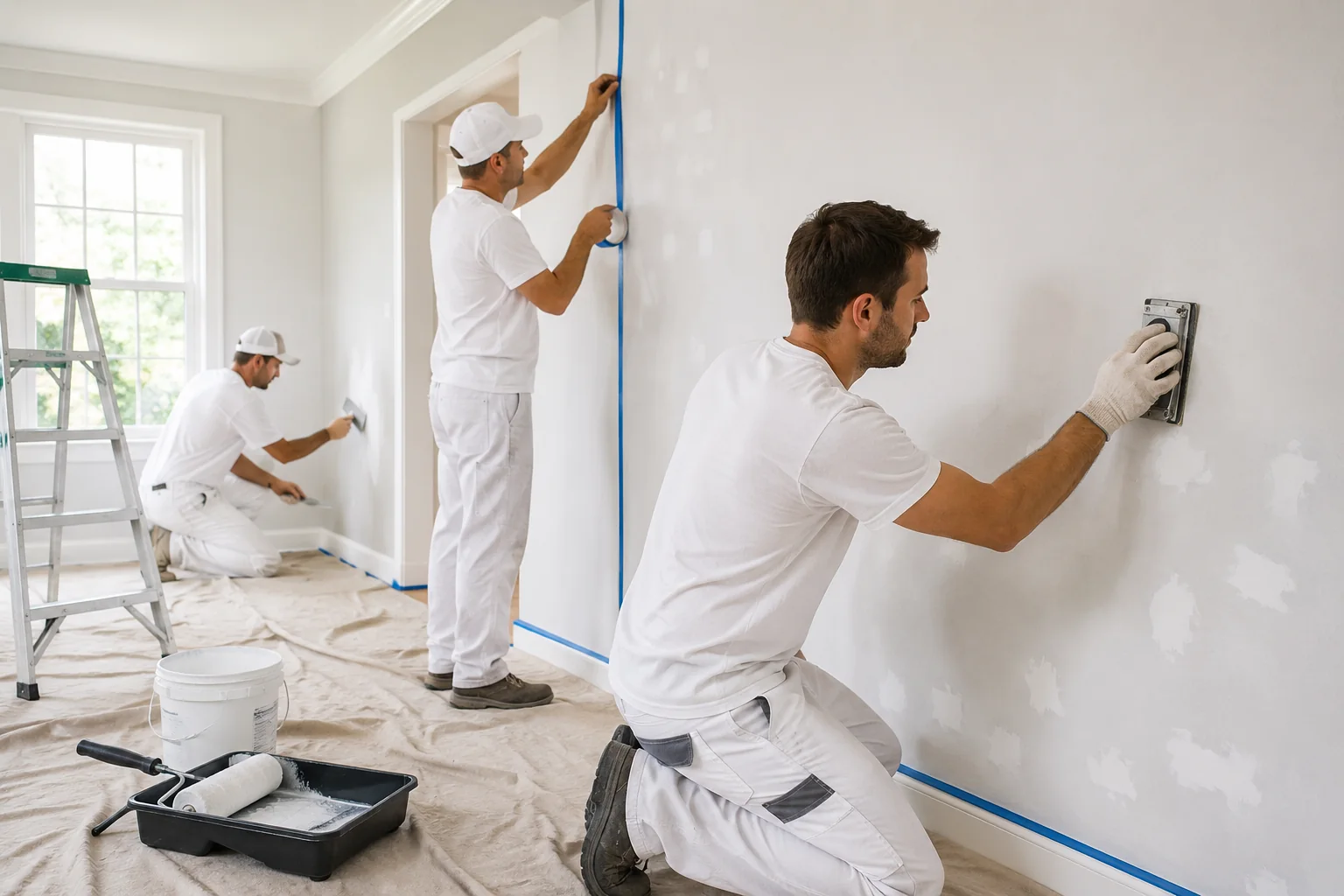
Proper surface preparation is the foundation of a clean, durable paint finish. Painting contractors know that paint cannot perform well when applied over dust, grease, peeling layers, cracks, moisture, or uneven surfaces.
Preparation helps the new coating bond correctly, appear smoother, and last longer. Without it, even high-quality paint may chip, bubble, fade unevenly, or reveal flaws beneath the surface. Contractors take time to inspect, clean, repair, sand, and prime before painting begins. This careful process protects walls, trim, siding, and ceilings while helping the final color look consistent and polished.
Preparation Before Paint
-
Inspecting the Surface for Hidden Problems
Painting contractors begin surface preparation with a close inspection of the area that will be painted. This step helps identify problems that may affect adhesion, texture, or finish quality. Interior walls may have nail holes, dents, stains, loose joint compound, glossy spots, or old paint that has begun to peel. Exterior surfaces may show weathering, cracked caulk, soft wood, chalky residue, mildew-like staining, or areas where moisture has affected the material.
Contractors look beyond appearance because some problems are not obvious from a distance. A small crack can allow water to enter, and a slightly loose paint layer can cause peeling later. Property owners reviewing https://highfillpainting.com/service-areas/chesterfield/ may be looking for painting support that includes this kind of careful inspection before coating begins. By identifying weak areas early, contractors can select appropriate repair and preparation methods before paint is applied.
-
Cleaning Away Dirt, Dust, and Residue
A clean surface is necessary because paint must bond directly to the underlying material. Dirt, dust, oil, smoke residue, pollen, chalking, and household buildup can interfere with adhesion and create an uneven finish—painting contractors clean surfaces based on the type of project and material involved. Interior walls may be wiped down, dusted, or washed with a mild cleaning solution where needed. Kitchen and bathroom areas often need extra attention because grease, steam, and soap residue can collect on walls and trim.
Exterior surfaces may require washing to remove grime, loose particles, and organic buildup before repairs or priming. Contractors allow surfaces to dry properly after cleaning because trapped moisture can cause bubbling or poor bonding. This step may seem simple, but it strongly affects how well the paint performs. A clean surface allows primer and paint to spread more evenly, bond more firmly, and create a smoother final appearance.
-
Repairing Cracks, Holes, and Damaged Areas
After cleaning and inspection, painting contractors repair surface damage so the paint does not highlight flaws. Small holes, dents, and cracks are filled with suitable patching material, then shaped and smoothed to match the surrounding area. Larger areas may require additional repair, such as replacing damaged trim, scraping loose paint, sealing gaps, or correcting failing caulk around windows, doors, and siding joints. For exterior projects, repairs are important because open cracks can allow water to reach the surface beneath the paint.
On interior projects, uneven patches can catch light differently and make the finished wall look rough. Contractors choose repair materials based on the surface, whether it is drywall, plaster, wood, masonry, or siding. Once repairs dry, they are sanded or blended so the area accepts paint evenly. Repair work gives the finished project a cleaner look and helps prevent early paint failure caused by hidden weak spots.
-
Sanding and Smoothing for Better Adhesion
Sanding is another important part of proper surface preparation. It helps smooth repaired areas, remove rough edges, dull glossy finishes, and create a surface that primer or paint can grip. Painting contractors use sanding methods that match the material and condition of the surface. A glossy wall, cabinet, door, or trim piece may need light sanding so the new coating does not slide over the old finish.
Patched drywall needs sanding to blend filler into the surrounding area. Weathered exterior wood may need sanding to remove loose fibers and create a more even base. Contractors also remove sanding dust before applying primer or paint, because dust left behind can create texture problems or reduce adhesion. This step requires patience because oversanding can damage surfaces, while too little sanding can leave imperfections visible. Proper sanding helps the paint settle more evenly and gives the finished surface a cleaner, more refined look.
-
Applying Primer for a Stable Base
Primer helps create a stable surface for paint, and painting contractors use it when the project requires better adhesion, stain blocking, color coverage, or surface sealing. Bare drywall, patched areas, raw wood, masonry, and stained surfaces often need primer before paint. Without primer, paint may absorb unevenly, leaving dull spots or color differences.
Primer can also help cover dark colors before applying a lighter shade, reducing the number of finish coats needed. In areas with previous stains, primer helps prevent marks from bleeding through the new paint. Contractors select primer based on the surface and the type of coating that will follow. A primer used on wood may differ from one used on drywall or masonry. This choice matters because the wrong primer may not bond properly or may fail to block stains. A well-primed surface provides a more consistent foundation for the final paint and supports longer-lasting results.
- Protecting Nearby Areas Before Painting
Surface preparation also includes protecting the areas that should not be painted. Contractors cover floors, furniture, landscaping, windows, fixtures, hardware, and nearby surfaces before work begins. Tape, drop cloths, plastic sheeting, masking paper, and careful setup help prevent splatters, drips, and dust from spreading. On interior projects, this protection keeps rooms cleaner and reduces cleanup after the job is complete. On exterior projects, it helps protect plants, walkways, brick, roofing, and outdoor features.
Contractors may also remove outlet covers, hardware, or light fixtures where needed to create cleaner edges. This step improves both safety and appearance because the work area stays organized and controlled. Protection is part of preparation because painting is not only about the surface receiving paint; it is also about preserving everything around it. A careful setup allows painters to work more efficiently while leaving the property cleaner and better protected.
Preparation Creates Lasting Paint Quality
Painting contractors ensure proper surface preparation by inspecting, cleaning, repairing, sanding, priming, and protecting the work area before applying paint. Each step helps the coating bond better, look smoother, and last longer. Skipping preparation can lead to peeling, uneven color, visible flaws, and early touch-ups. Careful prep work ensures the final paint performs as intended on walls, trim, siding, ceilings, and other surfaces. A strong finish does not come from paint alone. It comes from the condition of the surface beneath it and the attention given before the first coat begins.
