
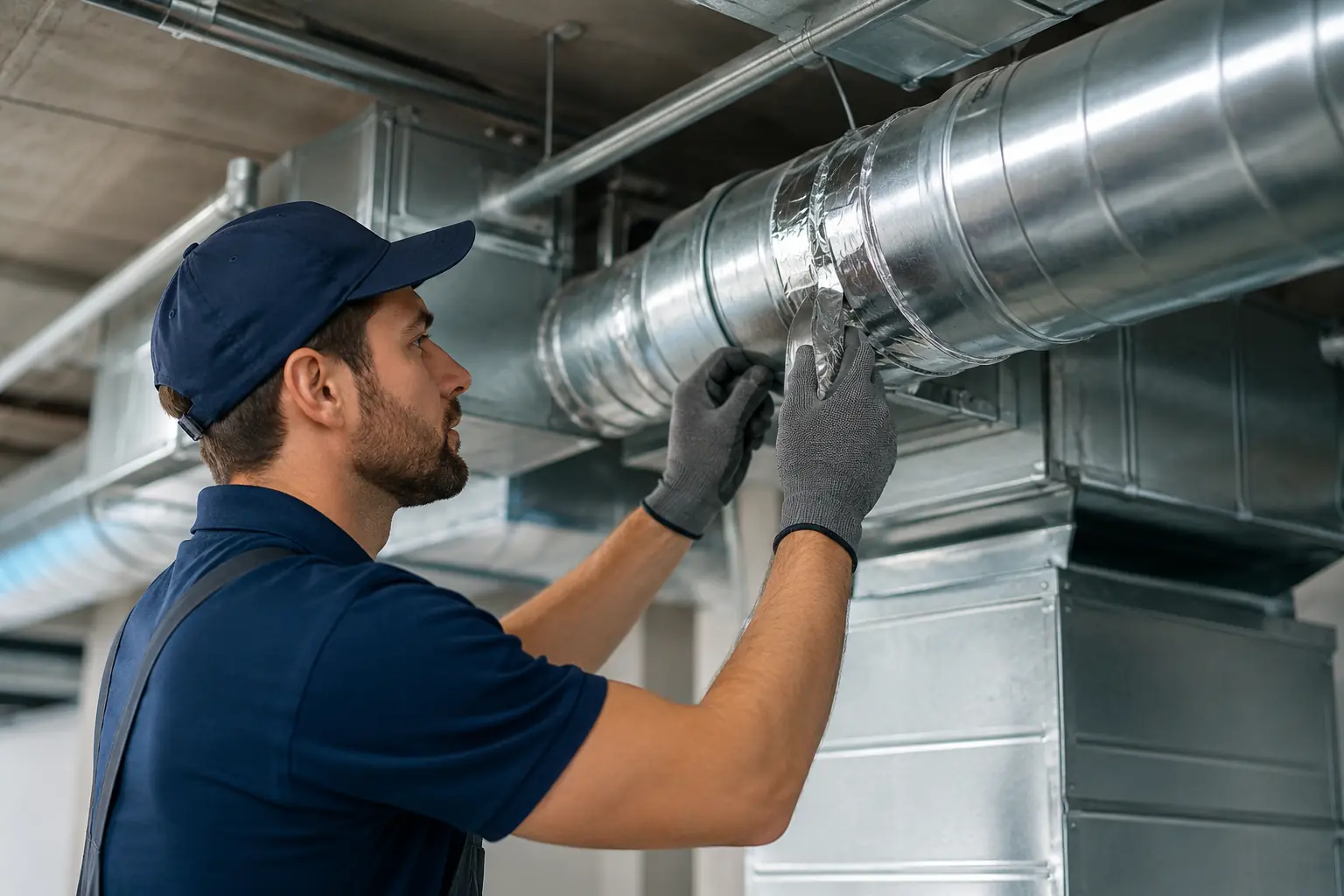
Ductwork is the circulatory system of an air conditioning system, distributing cooled or heated air throughout a home or commercial building. Properly designed and maintained duct systems ensure that air reaches every room evenly, maintaining consistent temperature and comfort. Poorly designed or leaky ducts can result in energy loss, uneven airflow, and increased strain on the HVAC system.
Over time, dust, debris, and sagging ducts can reduce airflow efficiency and compromise indoor air quality. Air conditioning contractors evaluate these systems to ensure they are properly sized, sealed, and insulated. Efficient ductwork contributes directly to energy savings, equipment longevity, and consistent indoor comfort, making it a critical focus during installation or maintenance of any HVAC system.
The Importance of Efficient Duct Systems
-
Assessing and Adjusting Duct Design
Contractors begin by evaluating the existing duct layout and design to identify inefficiencies. Ducts that are too small, excessively long, or improperly routed can create air pressure imbalances, reducing system performance. Similarly, flexible or poorly supported ducts may sag or kink, restricting airflow and increasing energy use. By examining the ductwork in relation to the overall HVAC system, contractors determine where adjustments or replacements are needed to improve efficiency.
Professionals in the field, including a Cleburne Air conditioning contractor, can recommend modifications such as resizing ducts, rerouting pathways, or adding additional branches to balance airflow. Properly planned duct design ensures that air reaches all areas evenly, reduces strain on the system, and improves both comfort and energy efficiency.
-
Sealing and Insulating Ductwork
Leaks in ductwork are a common source of energy loss in air conditioning systems. Even small gaps or holes can allow cooled air to escape into attics, crawl spaces, or walls, reducing efficiency and increasing utility bills. Contractors use sealing materials, such as mastic or foil tape, to close leaks at joints, seams, and connections. Insulating ducts in unconditioned spaces prevents thermal loss, ensuring that the temperature of air delivered to each room remains consistent.
Proper sealing and insulation also protect the system from strain, reducing wear on the blower and compressor. By addressing these issues, contractors help homeowners maintain a balanced system that performs efficiently while reducing energy waste and improving indoor comfort.
-
Balancing Airflow
Airflow balance is critical for maintaining consistent temperatures throughout a building. Uneven airflow can cause some rooms to be too cold while others remain warm, forcing the system to work harder and consume more energy. Contractors assess airflow using pressure measurements, temperature checks, and airflow meters, making adjustments to dampers or registers as needed. Proper balancing ensures that each area receives the correct amount of conditioned air while preventing the system from overworking. This process also improves occupant comfort and reduces energy usage by allowing the HVAC system to operate at its intended capacity. Balanced airflow is a key component of an efficient duct system and contributes to the system’s overall longevity.
-
Cleaning and Maintenance
Duct cleanliness affects both efficiency and indoor air quality. Dust, debris, and microbial buildup can restrict airflow, causing the system to consume more energy while reducing comfort. Contractors perform cleaning services to remove accumulated particles from the ducts, vents, and plenums, restoring proper airflow. Regular maintenance may also include checking for damage, loose connections, and insulation gaps to ensure the system continues to operate efficiently. By maintaining clean, well-functioning ducts, contractors prevent issues such as mold growth, airflow obstruction, and uneven cooling, all of which can affect comfort and energy consumption. Well-maintained ductwork supports the HVAC system in delivering consistent, efficient, and healthy indoor air.
-
Upgrading Duct Components
In some cases, older duct systems may not meet the requirements of modern air conditioning equipment. Contractors evaluate whether replacing or upgrading components such as vents, plenums, or duct materials can improve airflow efficiency and system performance. Rigid ducts may be installed to replace sagging or damaged flexible ducts, while high-efficiency registers and diffusers can distribute air more evenly within rooms. Upgrading components also allows integration with new technologies, such as zoning systems or variable-speed blowers, enhancing both comfort and energy efficiency. By investing in component improvements, contractors help homeowners achieve long-term performance gains, reduce energy consumption, and ensure the air conditioning system functions optimally throughout the building.
Optimized Ductwork Enhances HVAC Performance
Air conditioning contractors optimize ductwork by assessing layout, sealing and insulating connections, balancing airflow, cleaning systems, and upgrading components as needed. Properly maintained and designed ductwork ensures consistent airflow, reduces energy consumption, and improves comfort throughout the building.
Efficient ducts prevent system strain, extend equipment life, and maintain indoor air quality. By addressing leaks, blockages, and design inefficiencies, contractors provide solutions that enhance the overall performance of the HVAC system. Homes and commercial buildings benefit from reduced utility costs, reliable operation, and a more comfortable indoor environment. Well-optimized ductwork is a critical element in achieving long-lasting, efficient air-conditioning performance.
