
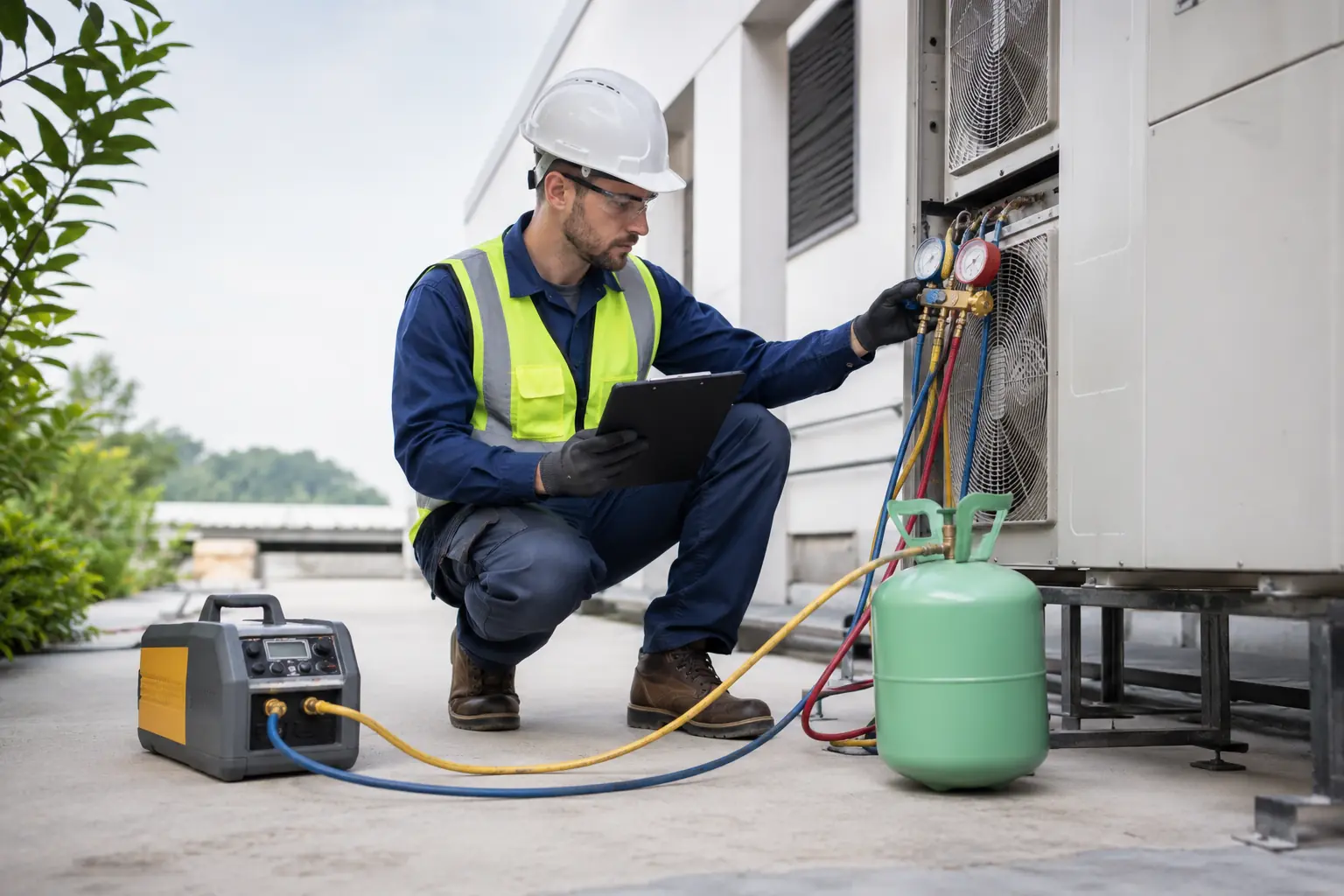
Refrigerant work is one of the most regulated parts of HVAC service because these chemicals can affect system performance, safety, and the environment when handled incorrectly. Contractors must manage refrigerant carefully during installation, repair, maintenance, recovery, and equipment disposal. This includes following federal requirements, using approved tools, preventing avoidable releases, tracking refrigerant movement, and staying informed as older refrigerants are phased down. Good compliance is not only about avoiding penalties; it also protects customers, equipment, workers, and air quality. Responsible refrigerant handling helps HVAC systems operate efficiently while reducing environmental harm.
Compliance Matters
-
Following Certification and Handling Requirements
Contractors comply with refrigerant regulations by ensuring that technicians who open sealed refrigerant systems have the required training and credentials. Under EPA Section 608, certification is required for people who maintain, service, repair, or dispose of appliances in a way that could release refrigerant into the environment.The EPA also states that technicians must pass an EPA-approved test, and the certification type depends on the equipment being serviced. A qualified HVAC contractor uses this framework to assign the right people to the right jobs, especially when servicing residential air conditioners, heat pumps, commercial refrigeration units, or larger cooling systems.
This matters because refrigerant work involves pressure, chemical handling, environmental rules, and system performance. When certification requirements are followed, customers gain more confidence that the work is being performed lawfully and with proper care. It also reduces the risk of accidental releases, poor charging practices, and unsafe equipment handling.
-
Recovering Refrigerant Instead of Releasing It
A major part of environmental compliance is refrigerant recovery. Contractors cannot simply vent refrigerant during service or disposal. EPA refrigerant management rules require anyone removing refrigerant from air-conditioning or refrigeration equipment to evacuate it to a required level using certified recovery equipment before service or disposal. This process keeps the refrigerant contained rather than allowing it to escape into the atmosphere.
During repairs, contractors properly connect recovery machines, tanks, gauges, and hoses so the refrigerant can be captured, weighed, labeled, and handled as appropriate. If the refrigerant is still usable, it may be reused in the same owner’s equipment when allowed. If it is contaminated or no longer needed, it must be sent through the proper reclaim or disposal path. This careful process protects the environment and helps contractors avoid waste. It also supports cleaner job sites because refrigerant is treated as a controlled substance rather than a throwaway material.
-
Managing Records, Leaks, and Equipment Condition
Refrigerant compliance also depends on documentation and leak awareness. Contractors may need to record refrigerant recovered, added, transferred, or sent for reclamation, depending on the equipment and service conditions. The EPA outlines recordkeeping duties for technicians, owners, operators, reclaimers, retailers, and wholesalers, which helps create accountability throughout the refrigerant supply chain. Good contractors also look for the causes of leaks rather than repeatedly adding refrigerant without correcting them. Low refrigerant levels can indicate damaged coils, loose fittings, worn valves, poor brazing, or vibration-related line wear.
If a leak is ignored, the system may lose capacity, consume more energy, and release refrigerant again. Proper leak detection, pressure testing, evacuation, and charging help restore performance while reducing environmental impact. Contractors also explain when repair is more reasonable than repeated recharge service. This approach protects customers from ongoing costs and helps keep refrigerants from being treated as routine loss during normal operation.
-
Adapting to HFC Phasedown Rules
Contractors must also stay current as refrigerant regulations change. In the United States, the American Innovation and Manufacturing Act gives EPA authority to phase down hydrofluorocarbons, manage HFCs and substitutes, and support transitions to next-generation technologies. EPA materials state that the AIM Act directs an eighty-five percent phasedown of HFC production and consumption from historic baseline levels by 2036. This affects what equipment can be manufactured, sold, installed, and serviced over time.
Contractors respond by learning which refrigerants are allowed for new systems, which products are being phased down, and how newer refrigerants must be handled. They also help customers understand whether repairing an older unit, retrofitting where suitable, or replacing equipment makes more sense. As lower-GWP refrigerants become more common, contractors must pay attention to labeling, tools, storage, safety classifications, and manufacturer instructions so compliance and performance remain aligned.
-
Protecting Customers Through Proper Disposal and Reclamation
Environmental compliance continues when old HVAC equipment is removed. Refrigerant must be recovered before disposal to prevent it from escaping when equipment is scrapped, crushed, or recycled. Contractors coordinate this step before replacing air conditioners, heat pumps, packaged units, or refrigeration equipment.
They may document the recovery process, separate refrigerant types, and send used refrigerant to appropriate reclaim channels when it cannot be reused. The EPA notes that used refrigerant sold for appliance use must be reclaimed by an EPA-certified reclaimer, which helps protect equipment and reduce environmental risks. Proper disposal also prevents customers from unknowingly violating rules when replacing equipment. A responsible contractor handles the full chain of care, from shutdown to recovery, removal, and replacement. This gives homeowners and business owners a cleaner process while ensuring the old system is not creating environmental harm after it leaves the property.
Contractors handle refrigerant regulations and environmental compliance through certification, recovery practices, leak management, documentation, responsible disposal, and awareness of changing HFC rules. These steps protect the environment while helping HVAC systems operate safely and efficiently. Proper refrigerant handling prevents avoidable releases, supports better equipment performance, and keeps customers informed during repairs or replacements. As regulations continue shifting toward lower-impact refrigerants, contractors must stay prepared with updated tools, procedures, and product knowledge. Careful compliance is not just a legal responsibility; it is an important part of reliable HVAC service, long-term system care, and environmental responsibility.
