
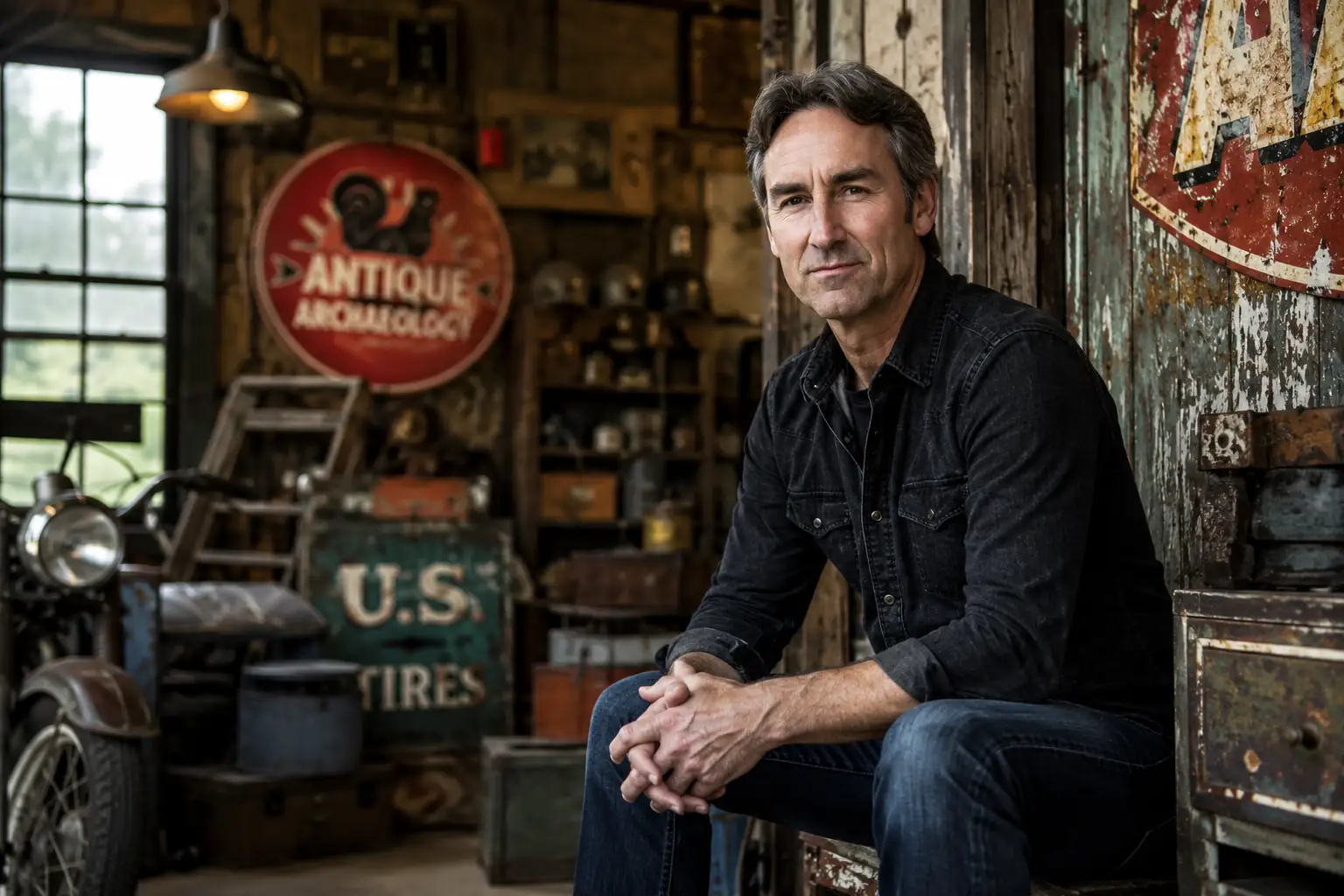
The Mike Wolfe passion project is a long-running, real-world effort by American Pickers creator Mike Wolfe to preserve historic buildings, revive small towns, and protect America’s cultural heritage through restoration and community investment. It is not a TV spinoff or a single initiative — it is a layered mission that spans architecture, craftsmanship, economic development, and storytelling. The project operates across Tennessee, Iowa, and beyond, with Columbia, Tennessee, serving as its most visible hub.
- Origins: How Mike Wolfe’s Passion Took Root
- American Pickers and the Rise of a Cultural Platform
- Core Pillars of the Passion Project
- Restoring Historic Architecture
- Reviving Small Towns and Communities
- Preserving Stories and Craftsmanship
- Mike Wolfe’s Business Empire and Net Worth
- Personal Life, Family, and Values
- The Loss of Frank Fritz and Life’s Hardships
- Why the Passion Project Matters Today
- Challenges of Historic Preservation
- Conclusion
- FAQs
- What exactly is the Mike Wolfe passion project?
- What is Nashville’s Big Back Yard, and how does it connect to Mike Wolfe?
- What did Mike Wolfe restore in Columbia, Tennessee?
- What is Mike Wolfe’s net worth in 2026?
- What happened to Frank Fritz from American Pickers?
- Is Mike Wolfe still married?
- What is Antique Archaeology, and where are its locations?
- How can fans get involved in Mike Wolfe’s preservation efforts?
Origins: How Mike Wolfe’s Passion Took Root
Wolfe grew up in Bettendorf, Iowa, where, as a child, he rode his bicycle through neighborhoods looking at discarded objects others ignored. A broken jukebox, a faded neon sign, an old tool — to him, each one was a fragment of someone’s history. That instinct to find meaning in overlooked things never left him.
By adulthood, it had evolved from collecting to connecting. He wasn’t just interested in the objects. He was drawn to the people who kept them, the buildings that housed them, and the communities built around them. That combination — objects plus stories plus place — became the foundation of everything he later built off-screen.
American Pickers and the Rise of a Cultural Platform
When American Pickers premiered on the History Channel in 2010, it gave Wolfe a national platform. He and co-host Frank Fritz traveled across the United States, digging through barns, garages, and warehouses for forgotten motorcycles, signage, and Americana. The show became one of the network’s highest-rated programs and introduced millions of viewers to the idea that history lives in ordinary places.
But the show was always secondary to the mission. Wolfe used it as leverage — building Antique Archaeology into a recognizable brand with retail locations in Le Claire, Iowa, and Nashville, Tennessee. His later project, History’s Greatest Picks, extended that lens toward legacy over transaction.
The television exposure gave him the resources and public trust to act on a larger scale off-camera. That’s where the real work began.
Core Pillars of the Passion Project
Restoring Historic Architecture
The most visible part of Wolfe’s project is physical restoration. In May 2025, he revealed plans to transform a historic Esso gas station in downtown Columbia, Tennessee. Working with design firm living_exo, he converted the abandoned structure into a community gathering space with outdoor seating, a fire pit, and a new tenant called Revival, which serves food and cocktails.
He also purchased a historic Columbia home for $700,000 and invested over $200,000 in renovations, navigating permits, structural challenges, and delays along the way. These are not quick flips. They are careful, adaptive reuse projects designed to preserve the original character of each building.
Wolfe’s approach treats every neglected structure as something worth saving — not because of what it was, but because of what it can still become for the people who live nearby.
Reviving Small Towns and Communities
Beyond individual buildings, Wolfe launched Nashville’s Big Back Yard — an initiative that promotes twelve small towns located between Nashville, Tennessee, and Muscle Shoals, Alabama. The goal is to attract remote workers, families, and entrepreneurs by highlighting affordable housing, strong community identity, and quality of life that larger cities can’t offer.
Columbia Motor Alley is another focus area. There, Wolfe promotes what he calls being a “History Detective” — encouraging residents and visitors to look deeper into local heritage before it disappears. The concept connects tourism, preservation, and civic pride in one framework.
Key elements of this revival effort include:
- Affordable relocation support for families and entrepreneurs
- Tourism is driven by restored landmarks and cultural destinations
- Short-term rentals in historically significant properties
- Community events anchored around downtown Columbia
Preserving Stories and Craftsmanship
Wolfe often says he doesn’t collect objects — he collects the stories attached to them. An antique without context is just old. With context, it becomes a piece of American culture.
This principle extends to the craftspeople he supports. Through the Two Lanes blog and micro-grant programs, Wolfe funds blacksmiths, sign painters, neon benders, and potters — artisans whose skills are at risk of disappearing. Recipients receive between $2,000 and $10,000, along with promotion through his platform, which connects them directly to buyers and supporters.
Mike Wolfe’s Business Empire and Net Worth
As of 2026, Mike Wolfe’s estimated net worth is $7 million. That figure reflects more than American Pickers royalties. His income streams include Antique Archaeology merchandise and licensing, book sales, speaking engagements, and production projects tied to new History Channel ventures.
| Revenue Source | Type |
| American Pickers | TV production, licensing |
| Antique Archaeology | Retail, merchandise |
| Speaking engagements | Personal brand |
| Book sales | Publishing |
| Restoration ventures | Real estate, community investment |
Wolfe reinvests heavily. Much of what he earns goes back into restoration projects and community initiatives rather than personal accumulation. The Nashville Antique Archaeology location closed recently, but new business activity in Le Claire, Iowa, and Columbia, Tennessee, signals a geographic refocus rather than a retreat.
Personal Life, Family, and Values
Wolfe was born in Joliet, Illinois, and graduated from Bettendorf High School. He married Jodi Faeth in 2012, and the couple had one daughter, Charlie Reece Wolfe. They divorced in 2021. He is currently in a relationship with Leticia Cline.
He keeps Charlie’s life private and rarely shares details about her on social media. In interviews, he has spoken about teaching her to appreciate art, history, and craftsmanship through everyday experiences rather than formal instruction.
His personal philosophy mirrors his professional one: build character over wealth, preserve what matters, and invest in relationships that outlast transactions.
The Loss of Frank Fritz and Life’s Hardships
The most emotionally significant chapter in recent years was the death of Frank Fritz, his longtime American Pickers co-host. The two had a well-documented professional strain before Fritz’s passing, but Wolfe publicly expressed grief and respect. He reflected on the years they spent building the show from nothing — the early road trips, the shared discoveries, the friendship that existed long before cameras were involved.
Fritz’s death reinforced Wolfe’s focus on community and human connection over career momentum. Hardship, in his case, has consistently pushed him toward preservation rather than away from it.
Why the Passion Project Matters Today
The timing of Wolfe’s work is not accidental. Post-pandemic, interest in local businesses, hometown pride, and authenticity surged. People began questioning the value of dense urban living and fast consumerism. Wolfe’s model — slower, rooted in place, built on craftsmanship — aligned with that cultural shift before most brands recognized it.
Small-town charm is no longer just nostalgia. For younger generations looking at housing costs in major cities, towns like Columbia, Tennessee, represent a practical alternative. Wolfe’s projects give those towns an identity worth investing in.
Challenges of Historic Preservation
Restoration is expensive, slow, and resistant to shortcuts. Wolfe’s Columbia home required $200,000 in renovations after a $700,000 purchase — and that process involved permit delays, structural surprises, and stakeholder friction. Not every building can be saved. Some are too far gone structurally. Others face resistance from developers or local governments who prefer new construction over adaptive reuse.
Funding remains the central constraint. Micro-grants help individual artisans, but large-scale building restoration requires sustained capital, community cooperation, and long-term vision. Wolfe’s ability to absorb those costs through his broader business is what makes the project viable — and also what makes it difficult to replicate without his platform.
Conclusion
Wolfe’s work proves that preservation is not sentimental — it is strategic. The Mike Wolfe passion project shows that restoring a building, funding a craftsperson, or spotlighting a forgotten town creates measurable economic and cultural value. If you’re a fan, the most direct way to engage is to visit Columbia, Tennessee, support the Two Lanes platform, or research Nashville’s Big Back Yard as a relocation or tourism option. The project is open to participation — not just observation.
FAQs
What exactly is the Mike Wolfe passion project?
It is Wolfe’s off-screen mission to preserve historic buildings, fund traditional craftspeople, and revive small American towns — most visibly centered in Columbia, Tennessee, through restoration projects and community investment.
What is Nashville’s Big Back Yard, and how does it connect to Mike Wolfe?
Nashville’s Big Back Yard is Wolfe’s initiative promoting twelve towns between Nashville, Tennessee, and Muscle Shoals, Alabama, as destinations for relocation, remote work, and tourism driven by affordable housing and cultural identity.
What did Mike Wolfe restore in Columbia, Tennessee?
In May 2025, Wolfe revealed the restored Esso gas station in downtown Columbia — transformed into a community gathering space with outdoor seating, a fire pit, and a food-and-cocktail tenant called Revival, completed with design firm living_exo.
What is Mike Wolfe’s net worth in 2026?
His estimated net worth is $7 million, built through American Pickers, Antique Archaeology retail and licensing, book sales, speaking engagements, and production work — much of which is reinvested into restoration and community projects.
What happened to Frank Fritz from American Pickers?
Frank Fritz, Wolfe’s longtime co-host on American Pickers, passed away after a period of personal and professional difficulties. Wolfe publicly honored him, reflecting on their shared history building the show and the friendship that preceded it.
Is Mike Wolfe still married?
No. Wolfe divorced Jodi Faeth in 2021 after nearly a decade of marriage. He has one daughter, Charlie Reece Wolfe, and is currently in a relationship with Leticia Cline. He keeps his family life largely private.
What is Antique Archaeology, and where are its locations?
Antique Archaeology is Wolfe’s retail and brand business, originally operating locations in Le Claire, Iowa, and Nashville, Tennessee. The Nashville location recently closed, with activity shifting toward Columbia, Tennessee, and Le Claire.
How can fans get involved in Mike Wolfe’s preservation efforts?
Fans can visit Columbia Motor Alley, follow the Two Lanes blog, tag restoration finds using #MikeWolfePassionProject, attend Rip & Ship volunteer days in Columbia, or purchase directly from artisans featured through Wolfe’s micro-grant program.
